Address
Zhengzhou, Henan, China
Work Hours
Monday to Friday: 7AM - 7PM
Weekend: 10AM - 5PM
Address
Zhengzhou, Henan, China
Work Hours
Monday to Friday: 7AM - 7PM
Weekend: 10AM - 5PM


Electrofusion HDPE pipe fittings are specialized components designed to connect high-density polyethylene pipes. Through electrofusion welding, PE pipes and HDPE fittings are fused into a single, solid unit, creating a robust, reliable, and leak-free joint. This connection method is widely used in water supply, gas distribution, mining, wastewater treatment, and industrial conveying systems.
Compared to traditional mechanical connections or heat fusion butt welding, electrofusion offers significant advantages: simplified operation, minimal environmental impact, consistent connection quality, and suitability for confined spaces. Jinquan provides a comprehensive range of HDPE electrofusion fittings with stable performance, meeting diverse engineering installation requirements across various sectors. This guide aims to offer users reference recommendations for selecting and installing HDPE electrofusion fittings, ensuring efficient and long-term reliable engineering connections.
Electrofusion welding technology for HDPE pipes is a welding method that uses electrical energy to heat the heating wires inside electrofusion HDPE pipe fittings, causing the contact surfaces of HDPE pipes and fittings to melt and fuse together. Its core principle involves applying electrical current to resistance wires embedded within the fitting’s inner wall, generating Joule heat. This melts the pipe and fitting at precisely controlled temperatures and durations, allowing molecular interpenetration and entanglement to form during the specified cooling period. The weld strength achieved through electrofusion matches that of the HDPE pipe itself. The entire process utilizes specialized HDPE electrofusion welding machines and barcode identification technology to ensure consistent, high-quality welds.
Electrofusion welding offers the following features:
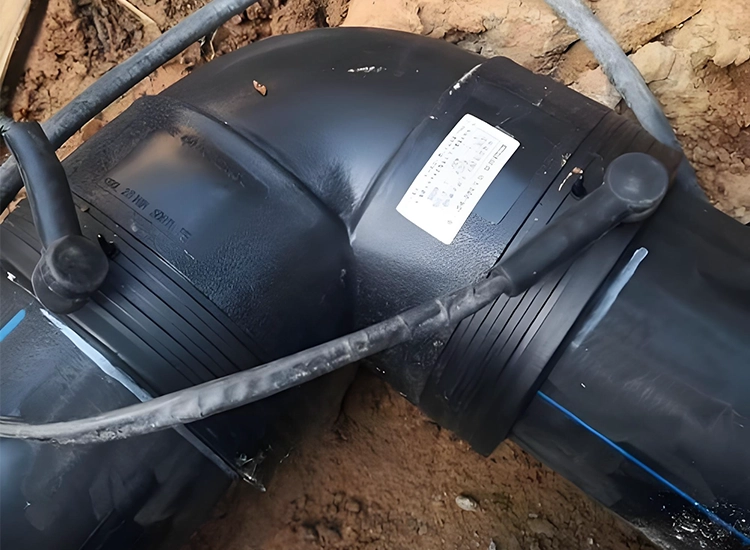
Jinquan offers a wide range of electrofusion HDPE pipe fittings that comply with international standards to meet the needs of various piping systems. Understanding the functions of different electrofusion fittings helps ensure the selection of the correct HDPE fittings.
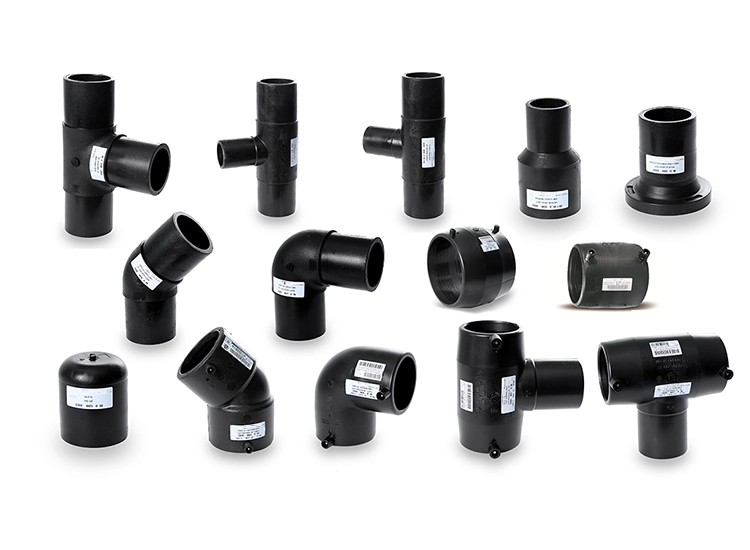
HDPE electrofusion fittings utilize high-density polyethylene material consistent with HDPE pipe properties, ensuring efficient, reliable, and sustainable engineering. Understanding the advantages of electrofusion HDPE fittings and correctly selecting and using electrofusion HDPE pipe fittings guarantees the long-term stable operation of PE piping systems.
When selecting appropriate HDPE pipe fittings for a project, it is essential to comprehensively consider various factors such as the actual construction environment, pressure rating, and applicable standards. Proper selection not only ensures welding quality and sealing performance but also extends the service life of the entire pipeline network system.
First, ensure the electrofusion fittings match the outer diameter of the HDPE pipe being used. HDPE electrofusion fittings have stringent dimensional tolerance requirements. The heating zone on the inner wall of electrofusion HDPE fittings must tightly contact the pipe’s outer surface to ensure uniform heat transfer and complete molecular fusion. Even minor diameter deviations can affect contact pressure, ultimately compromising weld quality. Jinquan offers a wide range of sizes and types of electrofusion fittings to accommodate diverse project requirements.
Different systems have varying pressure rating requirements. When selecting electrofusion HDPE pipe fittings, it is essential to ensure their pressure rating strictly matches or slightly exceeds the system’s design pressure. This is a critical parameter for ensuring the long-term safe operation of the piping system. For instance: – PN10 is generally suitable for potable water supply or low-pressure fluid conveying systems; – PN16 is typically suitable for municipal water supply and medium-pressure conveying systems; – PN25 is generally suitable for high-pressure fluid conveying systems. Higher pressure ratings correspondingly increase the wall thickness and pressure resistance of the fittings.
The selection of ELectrofusion HDPE pipe fittings should also be based on the specific application environment and media characteristics.
To ensure welding quality and long-term reliability, electrofusion pipe fittings should be made of the same grade of raw material as the pipe, such as PE100, PE80, or PE4710. Significant differences in melting points or chemical incompatibility between different materials can lead to insufficient weld bonding or a substantial decrease in weld strength. Therefore, using electrofusion HDPE pipe fittings of the same material grade as the HDPE pipe for electrofusion connection is a mandatory requirement to ensure that the joint has the same mechanical properties and service life as the pipe body.
High-quality HDPE electrofusion fittings should strictly adhere to international and regional standards to ensure system versatility and interchangeability. Certifications such as ISO and CE ensure that the material properties and welding parameters of HDPE electrofusion fittings meet international standards, and can also be customized to meet specific requirements. Adherence to standards is not only a requirement for project compliance but also a fundamental guarantee for ensuring good compatibility of electrofusion fittings with different brands of pipes and electrofusion welding machines, thereby achieving high-quality, traceable connections.
Proper usage is a decisive factor in ensuring the quality of electrofusion welds. Electrofusion welding is a process that demands extremely high levels of cleanliness, precision, and time control, and must be performed strictly according to the installation procedures.
First, ensure the HDPE pipe end face is perpendicular and flat. Then, use a professional scraper to thoroughly and evenly scrape the insertion area to remove the oxide layer. Clean the scraped area and the inside of the electrofusion HDPE pipe fittings thoroughly with a clean alcohol-soaked cloth to ensure a clean surface.
Insert the pipe into the fitting to the marked depth (usually the fitting’s centerline), ensuring the pipe end face is centered. Use a dedicated support clamp or centering tool to secure the pipe and fitting, preventing axial displacement or angular deviation due to stress release during heating.
Securely and reliably connect the electrofusion welding machine connector to the electrode post of the fitting. Scan or manually enter the fitting’s barcode. The electrofusion machine will automatically identify and set precise welding parameters. Start the machine and monitor the welding process throughout. Check if the welding indicator ring on the fitting is evenly raised. The machine will automatically complete the heating and melting process.
After electrofusion welding, the pipes should not be moved arbitrarily; allow them to cool naturally. Before putting them into use, conduct a pressure test to verify the long-term sealing of the welded joints and the overall quality of the piping system.
Electrofusion HDPE pipe fittings, with their safe, reliable, and quick connection method, have become one of the mainstream choices for modern piping engineering. This guide details the advantages, types, selection, and standardized welding procedures of electrofusion HDPE pipe fittings. By correctly selecting the right type, following standardized construction procedures, and using high-quality Jinquan HDPE electrofusion fittings, you can ensure that your piping system achieves excellent performance in the long term, with no leakage, low maintenance, and a long service life. In addition, Jinquan also offers butt fusion HDPE pipe fittings, socket HDPE pipe fittings, PP compression fittings, and other HDPE fittings, providing a variety of HDPE fitting types to suit different projects.
Fill out the form and our team will contact you shortly.