Address
Zhengzhou, Henan, China
Work Hours
Monday to Friday: 7AM - 7PM
Weekend: 10AM - 5PM
Address
Zhengzhou, Henan, China
Work Hours
Monday to Friday: 7AM - 7PM
Weekend: 10AM - 5PM


With the advancement of modern agriculture, efficient and sustainable irrigation methods have become crucial for enhancing crop yields and water resource utilization. Traditional irrigation systems rely on metal and concrete pipes, which suffer from issues such as corrosion, leaks, and high maintenance costs. These systems struggle to meet modern agriculture’s demands for efficient water conservation and extended service life, thereby compromising irrigation efficiency and posing challenges to the sustainability of agricultural production. HDPE irrigation pipes, with their advantages of durability, corrosion resistance, flexibility, and environmental friendliness, are gradually becoming the preferred choice for agriculture.
Traditional agricultural irrigation pipes suffer from issues such as susceptibility to rust, transportation difficulties, high maintenance costs, and leakage. While lighter PVC pipes offer easier transport, they are prone to breakage and have limited resistance to pressure and UV exposure. The current global climate change and water scarcity have spurred demand for more efficient and sustainable irrigation systems in agriculture. There is a growing expectation for agricultural irrigation piping systems to be durable, water-saving, efficient, and environmentally friendly.
Government and agricultural agencies are also actively promoting water-saving, sustainable piping solutions. High-density polyethylene pipes, with their corrosion resistance, flexibility, durability, and high water delivery efficiency, are gradually replacing traditional agricultural irrigation pipes and have gained widespread adoption in agricultural systems.
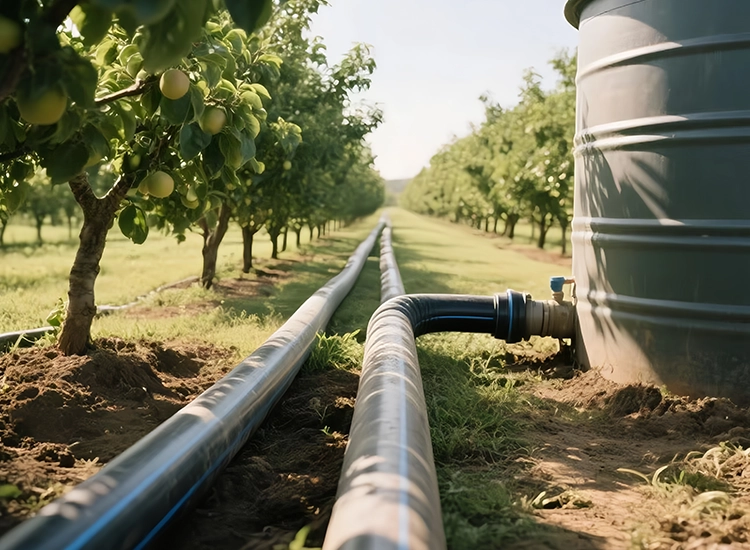
HDPE irrigation pipe has become the ideal choice for modern agricultural irrigation systems, precisely due to the following core advantages.
The greatest advantage of HDPE pipe for irrigation lies in its exceptional corrosion and chemical resistance. Metal or concrete pipes suffer erosion from soil over time, whereas HDPE material is chemically inert. Agricultural irrigation pipes made from high-density polyethylene effectively resist corrosion from acidic or alkaline substances in soil, as well as fertilizers and pesticides. This ensures water quality safety and maintains structural integrity even after prolonged use, preventing pipe ruptures and leaks caused by corrosion. Consequently, the service life of the pipes is significantly extended.
For farmland facing water scarcity or complex soil conditions, HDPE pipes demonstrate superior reliability and cost-effectiveness, making them an ideal choice for modern agricultural irrigation.
One of the most compelling advantages of HDPE irrigation pipes is their exceptional durability and service life exceeding 50 years. HDPE pipes exhibit outstanding impact resistance, abrasion resistance, and resistance to environmental stress cracking, maintaining stable performance even when buried underground for extended periods or exposed to harsh outdoor conditions. HDPE water pipes demonstrate strong resistance to external loads. Their inherent flexibility helps absorb external pressure impacts, reducing the risk of pipe damage.
When treated with specialized stabilizers, HDPE irrigation pipes effectively resist ultraviolet radiation. They resist brittleness and degradation in open-air environments, maintaining stable physical properties that ensure long-term system reliability. Additionally, HDPE water pipes typically perform reliably within a temperature range of -40°C to 60°C.
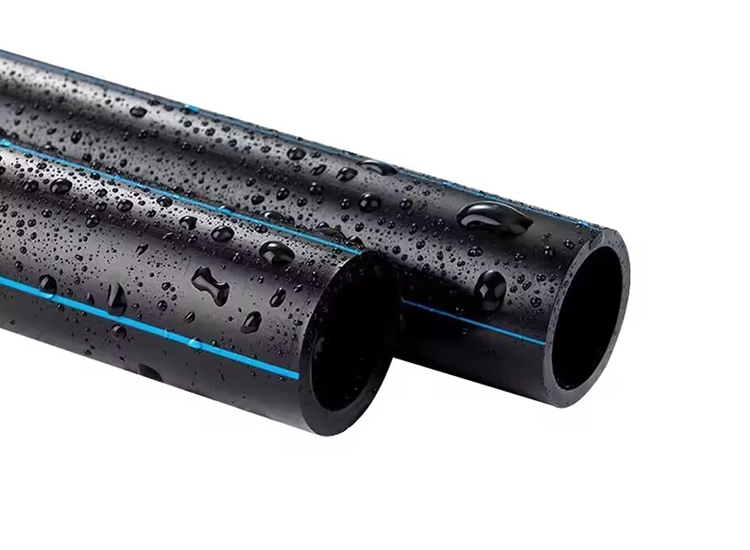
HDPE irrigation pipe, unlike other metal or concrete pipes, offers exceptional flexibility, easily adapting to complex agricultural terrain. Whether traversing undulating hills or uneven fields, HDPE pipe naturally extends and bends with the contours of the land, effectively accommodating diverse agricultural irrigation layout requirements.
Furthermore, HDPE pipes are lightweight and easy to transport, significantly reducing shipping and installation costs. Small-diameter PE pipes are supplied in coiled form, allowing for continuous long-distance laying and boosting installation efficiency. Additionally, HDPE pipe fusion enables seamless joining, creating a robust, leak-free system. This simple and efficient connection method makes HDPE irrigation pipes an ideal choice for agricultural projects of all scales.
Today’s society faces the challenge of water scarcity. In modern agriculture, efficient utilization of irrigation water resources is crucial. HDPE irrigation pipes enable leak-free connections and exceptional water use efficiency. For jointing, HDPE pipes employ butt fusion or electrofusion welding technology, achieving truly seamless connections. The strength at the joints even surpasses that of the pipe material itself, ensuring stability even under high-pressure water delivery conditions. These robust connections eliminate potential leakage risks, enhance water utilization efficiency, ensure uniform water distribution, and ultimately boost agricultural yields. The high water conveyance efficiency and reliability of HDPE irrigation pipes make them the preferred choice for developing water-saving agriculture.
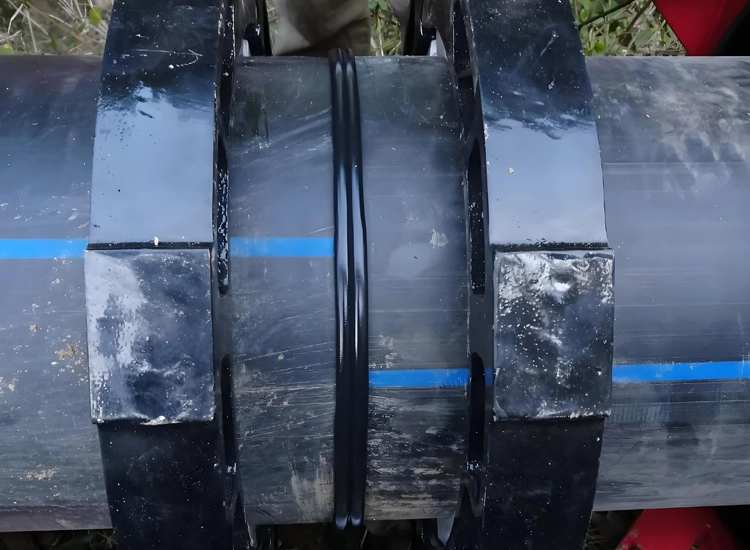
HDPE pipes demonstrate exceptional versatility in agricultural applications, serving effectively in drip irrigation, sprinkler irrigation, subsurface irrigation, and gravity-fed water delivery systems. They meet diverse irrigation requirements for various crops and farmland types. Whether deployed in orchards, greenhouse cultivation, or large-scale agricultural regions, HDPE pipes consistently deliver stable and reliable water conveyance performance.
HDPE plastic pipes not only enhance irrigation efficiency but also provide reliable support for the advancement of modern smart agriculture.
Modern agriculture is transitioning toward green and sustainable development, and the eco-friendly properties of high-density polyethylene (HDPE) plastic pipes align with this sustainable philosophy. Manufactured from non-toxic, odorless, and recyclable materials, HDPE irrigation pipes do not release harmful substances into soil or water resources, ensuring the safety of agricultural products. The production of HDPE pipes consumes relatively low energy, and they are 100% recyclable, enabling their processing into new plastic products and achieving resource circulation.
Additionally, the durability of HDPE water pipes reduces replacement and maintenance frequency. Their leak-free connections minimize water waste, lower agricultural irrigation energy consumption, and deliver dual environmental and economic benefits.
HDPE irrigation pipes are gradually replacing traditional metal or concrete pipes due to their corrosion resistance, long service life, flexibility, leak-free performance, high water delivery efficiency, and environmental benefits. They are building an efficient, reliable, and eco-friendly agricultural irrigation system for people. HDPE pipes not only meet farmers’ demands for stable water supply and low maintenance costs but also provide robust support for global water resource management and the future development of sustainable agriculture by enhancing water delivery efficiency and extending pipeline lifespan. JINQUAN delivers high-quality HDPE irrigation pipeline solutions worldwide.
Fill out the form and our team will contact you shortly.