Address
Zhengzhou, Henan, China
Work Hours
Monday to Friday: 7AM - 7PM
Weekend: 10AM - 5PM
Address
Zhengzhou, Henan, China
Work Hours
Monday to Friday: 7AM - 7PM
Weekend: 10AM - 5PM


In the construction industry, selecting the appropriate piping is critical to ensuring optimal performance and extending the service life of piping systems. Plastic pipes, with their advantages of lightweight, corrosion resistance, and long service life, have gradually replaced traditional metal pipes and become the mainstream in the market. PPH and PPR pipes are two widely used types of pipes in piping systems. In this article, we will thoroughly explore the differences between PPH and PPR pipes to help you select the most suitable pipe material based on your actual needs, ensuring the safety and cost-effectiveness of your project.
PPH pipe, short for polypropylene homopolymer (PPH) pipe, is a high-performance thermoplastic pipe made from high-purity polypropylene through a special manufacturing process. Compared to ordinary PP pipe, PPH pipe has a more regular molecular structure and higher crystallinity, resulting in superior heat resistance, corrosion resistance, and chemical resistance. PPH pipes have a lower density but higher mechanical strength, with a service life of over 50 years.
In industries such as chemicals, metallurgy, electroplating, papermaking, and pharmaceuticals, PPH pipes are commonly used for transporting highly corrosive media such as acid, alkali, and salt solutions, without suffering from rusting or scaling like metal pipes. Their manufacturing adheres to international standards such as ISO 15874, employs water pressure design principles, and ensures consistency in pressure ratings through the SDR (Standard Dimension Ratio) and PN (Nominal Pressure, unit: bar/MPa) systems.

Due to the excellent properties of PPH pipes, they have been widely applied in various fields such as chemical industry, food processing, pharmaceuticals, and water supply and drainage.
Additionally, due to their high-temperature resistance, Polypropylene Homopolymer pipes are also used in some food processing and pharmaceutical equipment to transport hot water or steam.
PPR (Polypropylene Random Copolymer) pipe is a type of plastic piping specifically designed for hot and cold water supply systems and heating systems. Compared to ordinary PP pipes, PPR water pipes enhance the flexibility and impact resistance of the piping material by incorporating a certain proportion of random copolymer monomers into the polypropylene molecular chain. PPR cold wan hot water pipes are non-toxic, odorless, and corrosion-resistant, posing no risk of secondary water contamination, making them particularly suitable for drinking water transportation. They can operate continuously at temperatures below 70°C and withstand instantaneous temperatures up to 95°C, enabling them to safely transport both cold and hot water. The smooth inner walls of PPR pipes minimize flow resistance, prevent scale buildup, and inhibit bacterial growth, effectively ensuring the hygiene and safety of water quality within the pipes.
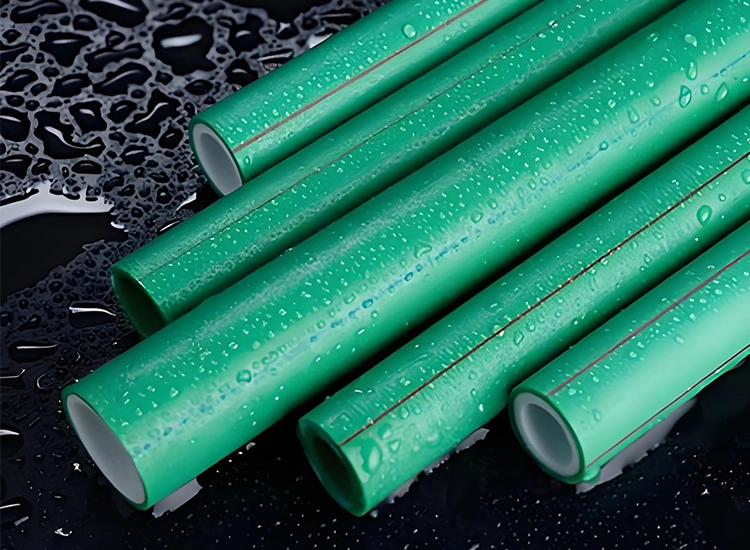

PPR pipes are renowned for their exceptional performance, are widely used in various fields such as home renovation, industrial applications, and agricultural irrigation.
Additionally, due to their non-toxic, odorless nature and excellent hygiene properties, PPR pipes are also suitable for use in environments with high water quality requirements, ensuring the purity of the water.
Although PPR pipes and PPH pipes are both made of polypropylene material, they differ significantly in terms of performance and application. PPR pipes are primarily composed of a random copolymer structure, offering excellent flexibility and high impact resistance. They are suitable for hot and cold water transportation and domestic water systems, emphasizing safety, hygiene, and comfort. In contrast, PPH pipes feature a homopolymer structure with high crystallinity, superior corrosion resistance, and enhanced high-temperature performance. They are primarily designed for applications in the chemical industry and industrial fluid transportation sectors.
| Comparison Item | PPH Pipe | PPR Pipe |
|---|---|---|
| Material | Polypropylene Homopolymer | Polypropylene Random Copolymer |
| Temperature Resistance | Long-term 60-80°C, short-term 90°C | Long-term 70°C, short-term 95°C |
| Pressure Resistance | High | Medium |
| Toughness | Brittle, easy to crack at low temperature | Excellent, maintains toughness in low temperature environment |
| Corrosion Resistance | Excellent, resistant to acid, alkali and chemical media | Good, but weaker than PPH pipe |
| Welding Performance | High temperature welding, easy to deform | Butt fusion connection, good sealing performance |
| Mechanical Performance | High rigidity, low toughness | Good impact resistance |
Through comparative analysis, it can be seen that PPH pipes and PPR pipes each have their own advantages in terms of structure, performance, and application areas. PPH pipes exhibit exceptional resistance to acids and alkalis, making them particularly suitable for corrosive environments such as chemical and pharmaceutical industries; PPR pipes, on the other hand, offer superior flexibility and robust connections, making them an ideal choice for building hot and cold water systems and heating systems.
JINQUAN consistently uses high-quality materials and advanced production processes to provide PPH and PPR pipe solutions globally, as well as PPH fittings, PPR fittings, DWC pipe, MPP pipe, HDPE pipe and fittings, PE-RT pipe and fittings, and others. We always provide plastic pipes that meet international standards, offering customers safe, reliable, and cost-effective pipe system solutions. Please contact us if you have any needs.
Fill out the form and our team will contact you shortly.