Address
Zhengzhou, Henan, China
Work Hours
Monday to Friday: 7AM - 7PM
Weekend: 10AM - 5PM
Address
Zhengzhou, Henan, China
Work Hours
Monday to Friday: 7AM - 7PM
Weekend: 10AM - 5PM


Water supply systems ensure the safety and hygiene of daily water use, serving as the foundation for social development. They guarantee water supply, support industrial production and public services, and promote economic and social stability. As society develops at an accelerated pace, the demand for clean water continues to grow, making the selection of appropriate water supply pipe materials a critical factor in ensuring efficiency, safety, and long-term reliability. In today’s era, HDPE pipes are gradually replacing traditional metal pipes due to their outstanding performance advantages, becoming the preferred choice for water supply infrastructure. This article will explore why HDPE pipes are the optimal choice for water supply systems.
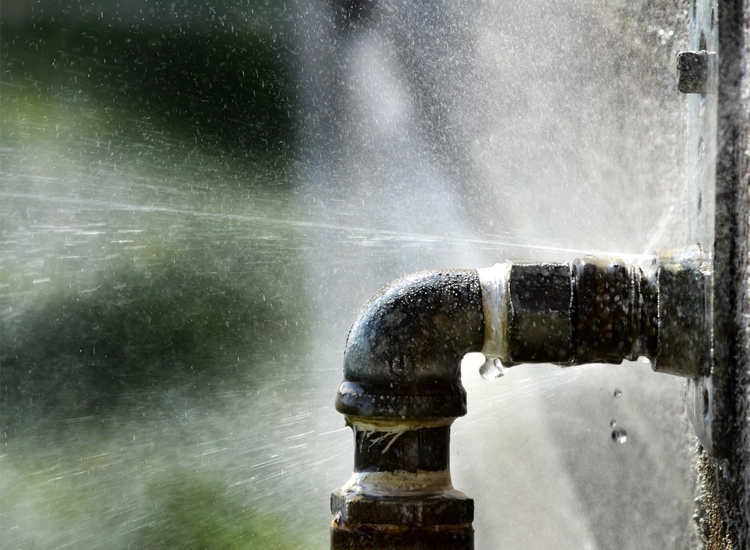
Traditional water supply networks are plagued by numerous issues and urgently require innovative technologies and materials to address them. Over time, aging infrastructure has become a major challenge for many urban water systems. Traditional metal pipes often suffer from corrosion, leaks, and ruptures, severely disrupting normal water supply for daily use. This not only wastes water resources but also increases maintenance and replacement costs.
Traditional metal pipes are susceptible to corrosion from impurities in the water or soil, leading to rusting and scaling, which reduces their load-bearing capacity. Additionally, water supply pipe systems are also facing challenges posed by global climate change. Therefore, water supply systems urgently require more advanced, adaptable, durable, and corrosion-resistant HDPE pipes to maintain the stability of the water supply network.
HDPE pipes are thermoplastic pipes made from high-density polyethylene resin through a hot-melt extrusion process. They feature a tightly structured molecular composition, offering advantages such as corrosion resistance, flexibility without cracking, low fluid resistance, and reliable connections. HDPE pipes have a density ranging from 0.94 to 0.97g/cm³, with tightly packed molecular structures that provide higher rigidity and chemical resistance. Under long-term use, PE100 pipes can operate normally at temperatures between -60°C and 60°C, and can withstand short-term exposure to temperatures up to 80°C. HDPE water supply pipes are widely used in water supply networks, rainwater drainage systems, wastewater treatment systems, and industrial applications.
Unlike PVC or traditional metal materials, HDPE offers more advantages that meet the various requirements of modern water supply networks, enabling HDPE pipe systems to operate stably for a long time. Let’s take a closer look at the advantages of HDPE that make it the first choice for water supply systems.
Durability is one of the key reasons for selecting high-density polyethylene (HDPE) pipes in modern water supply systems. Under normal operating conditions, the expected service life of HDPE water pipes can reach 50 to 100 years. During water supply operations, pressure fluctuations subject the pipe walls to repeated stress. Many materials experience performance degradation under cyclic pressure fluctuations, whereas HDPE plastic pipes can withstand such cyclic loads without fracturing.
HDPE is a flexible yet resilient material that resists slow crack propagation and stress cracking. It is not easily damaged by soil movement, ground settlement, or external impacts. Even in harsh environments, HDPE pipes maintain excellent durability, making them the preferred choice for reliable and cost-effective water supply systems.
Metal pipes are prone to rusting and aging when exposed to water, soil minerals, or chemicals. In contrast, HDPE water supply pipes offer superior corrosion resistance and chemical resistance, maintaining structural stability in corrosive environments. This extends the service life of HDPE water supply systems and reduces the frequency of maintenance and replacement. Additionally, the chemical inertness of high-density polyethylene allows it to safely transport drinking water without reacting with various substances or leaching harmful chemicals into the water supply system.

HDPE pipes can also transport wastewater, industrial wastewater, and corrosive liquids in chemical treatment systems. Their corrosion resistance allows HDPE pipes to be buried underground for extended periods, with smooth inner walls preventing sediment or scale buildup. Whether for drinking water distribution or industrial fluid transportation, HDPE pipes are a wise choice.
Plastic pipes made from high-density polyethylene (HDPE) exhibit exceptional adaptability to challenging environmental conditions. Unlike rigid or brittle materials that may fail under environmental stress, HDPE pipes maintain their performance and integrity across a wide range of temperatures, soil types, and installation conditions. The inherent flexibility and toughness of HDPE water supply pipes allow them to bend and deform in response to terrain changes without cracking.
PE water pipes exhibit excellent impact resistance, capable of absorbing and dispersing sudden loads caused by heavy traffic, mechanical vibrations, or accidental impacts. They can be installed using trenchless methods, enabling rapid, low-disruption installation even in complex terrain conditions. For engineers seeking high elasticity and flexibility in harsh field conditions, HDPE pipes offer a reliable solution.
Unlike metal pipes, HDPE pipes offer excellent flexibility, enabling them to adapt to various complex terrains. Small-diameter HDPE pipes can be installed in coiled form, reducing the number of joints and fittings required and enhancing the overall reliability of the water supply system. Additionally, HDPE water pipes are lightweight, making them easier to transport and handle. They can be installed efficiently and conveniently, naturally bending according to terrain, making them ideal for areas with poor transportation, complex topography, or limited space. In summary, PE100 pipes, with their exceptional flexibility, lightweight design, and ease of installation, have become an indispensable plastic pipe material for modern water supply systems.
Under normal circumstances, HDPE pipes can be connected using methods such as heat fusion welding, socket welding, and electrofusion welding. For small-diameter HDPE pipes, PP compression fittings can also be used for connection. These connection methods can securely weld the various sections of the pipeline into a continuous, seamless integrated system. These fusion welding technologies significantly enhance the sealing performance and overall strength of the pipeline system. The joint strength is typically equal to or even exceeds that of the HDPE pipe itself, enabling a zero-leakage water supply system. For projects with high requirements for the reliability and efficiency of water supply systems, HDPE pipes are the preferred choice.
High-density polyethylene (HDPE) is a recyclable material. Discarded HDPE pipes can be recycled and reprocessed into new plastic products or recycled pipe materials, effectively reducing the generation of construction waste and minimizing environmental impact. HDPE exhibits superior resistance to scaling compared to traditional metal pipes, featuring smooth inner walls that prevent bacterial growth or sediment buildup, thereby ensuring the safety of water quality in supply systems. The chemical stability and corrosion resistance of HDPE water pipes ensure they remain unaffected by corrosion throughout their service life. Even after long-term stable operation, they maintain structural integrity and water conveyance performance, thereby reducing maintenance frequency.
The rapid development of society requires the construction of an efficient, safe, and sustainable water supply system to ensure stable daily living conditions for people. HDPE pipes, with their durability, corrosion resistance, chemical stability, flexibility, lightweight design, ease of installation, strong sealing properties, and environmental friendliness, have become the preferred plastic pipes for modern infrastructure water supply systems.
JINQUAN, as a globally trusted HDPE pipe manufacturer and supplier, provides HDPE pipe solutions for water supply systems worldwide and has earned the widespread trust of its customers. We also offer PVC pipes, HDPE pipe fittings, MPP pipes, DWC pipes, PPR pipes and fittings, IPS PPH pipe fittings, and others. JINQUAN aims to become your long-term partner.
Fill out the form and our team will contact you shortly.