Address
Zhengzhou, Henan, China
Work Hours
Monday to Friday: 7AM - 7PM
Weekend: 10AM - 5PM
Address
Zhengzhou, Henan, China
Work Hours
Monday to Friday: 7AM - 7PM
Weekend: 10AM - 5PM


Aging infrastructure is currently costing municipalities billions worldwide. In this context, large diameter HDPE pipe applications have emerged as the definitive answer for high-volume fluid transport. While traditional concrete and steel decay rapidly, HDPE offers a service life that easily exceeds a century.
This guide cuts through the noise to examine critical use cases—from high-pressure potable water transmission and trenchless sewer rehabilitation to aggressive industrial slurry transport and complex marine outfalls. We will break down the engineering logic behind choosing PE100 over ductile iron, detail the technical specifics for sizing DN500 to DN1200 pipes under ISO 4427 standards, and demystify the logistics of shipping oversized cargo. By the end, you’ll have the insights needed to optimize your material specs for hydraulic efficiency and a practical checklist for evaluating manufacturers on extrusion capacity, quality control, and cost-saving nesting strategies.
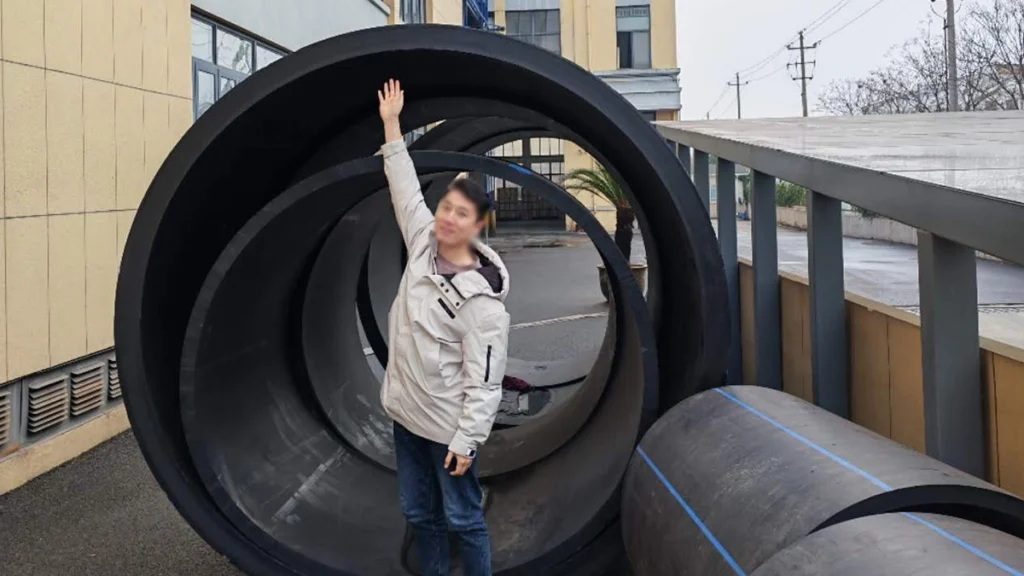
—
Switching from rigid materials like Reinforced Concrete Pipe (RCP) and Ductile Iron Pipe (DIP) to High-Density Polyethylene (HDPE) isn’t just a trend; it’s an engineering necessity driven by Total Cost of Ownership (TCO). For heavy infrastructure projects requiring diameters larger than DN500, JINQUAN’s HDPE Pipe solutions offer a monolithic, leak-free system capable of surviving environmental stresses that would fracture rigid alternatives.
When engineers specify materials for large-bore transmission lines, the decision usually comes down to weight, corrosion resistance, and joint integrity. Traditional materials frequently fail because joints separate or chemicals attack the pipe wall. HDPE changes the game in these specific areas.
Material Comparison Matrix for Large Diameter Piping:
| Feature | HDPE (JINQUAN PE100) | Ductile Iron (DIP) | Reinforced Concrete (RCP) |
|---|---|---|---|
| Weight | ~1/8th of DIP (Lightweight) | Heavy (Requires heavy cranes) | Very Heavy (High transport cost) |
| Corrosion Resistance | Immune to pH 0-14 & H2S gas | Prone (Requires polywrap/lining) | Prone to sulfide attack & spalling |
| Joint Integrity | Leak-free Fused System | Bell & Spigot (Gasket reliance) | Bell & Spigot (High leakage risk) |
| Flow Coefficient | C = 150 (Constant) | C = 140 (Decreases over time) | C = 120 (Rough surface) |
| Surge Fatigue | Excellent (Dampens water hammer) | Good | Poor (Rigid, prone to cracking) |
The weight advantage alone dramatically lowers installation costs. A DN1000 HDPE pipe can often be maneuvered with lighter excavators than an equivalent concrete segment. Plus, standard lengths of 11.8m mean far fewer joints per kilometer compared to short concrete sections. Crucially, HDPE is immune to galvanic corrosion and electromechanical attack, meaning you can scrap the budget lines for cathodic protection or polyethylene encasement usually needed for iron pipes.
For municipal water boards and plant managers, a pipeline’s long-term cost is mostly about energy. The Hazen-Williams C-factor measures internal smoothness; higher numbers mean less friction and lower energy bills.
JINQUAN’s large diameter HDPE pipes hold a C-factor of 150 to 155 for their entire lifespan. Steel and ductile iron might start at C=140, but tuberculation (internal rusting) and scaling inevitably drag that number down—often below 100 in older systems. As the pipe gets rougher, pumps have to work harder.
By choosing large diameter HDPE, engineers can often spec smaller pumps or get higher flow rates for the same energy cost. On a 10km transmission main, the energy savings over 50 years can run into the millions, effectively paying back the initial material investment. The non-stick nature of PE100 also stops biofilms and scale from taking hold, keeping the hydraulic diameter consistent for decades.
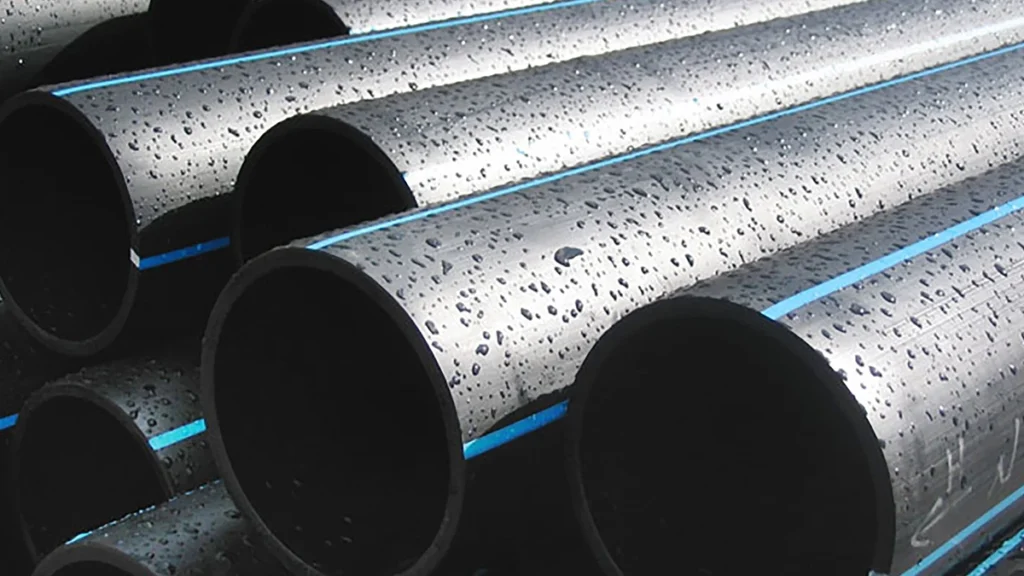
Infrastructure resilience is a top priority in modern engineering. Rigid pipes rely on compressive strength, but they fail catastrophically under the tensile stress caused by ground movement.
HDPE is different; it’s ductile. JINQUAN’s PE100 pipes can handle an allowable tensile strain of over 3%, while ductile iron allows less than 1%. In both lab tests and real-world earthquakes, HDPE pipes have shown they can elongate and deform without breaking. This flexibility lets the pipeline move with ground settlement, absorb seismic shock waves, and handle traffic vibration without stress-cracking. For municipal trunk lines crossing fault zones or unstable soils, this ductility is the single most critical safety factor.
A piping system is only as strong as its joints. The gasketed bell-and-spigot joints common in DIP and RCP are notorious for infiltration (groundwater getting in) and exfiltration (sewage leaking out).
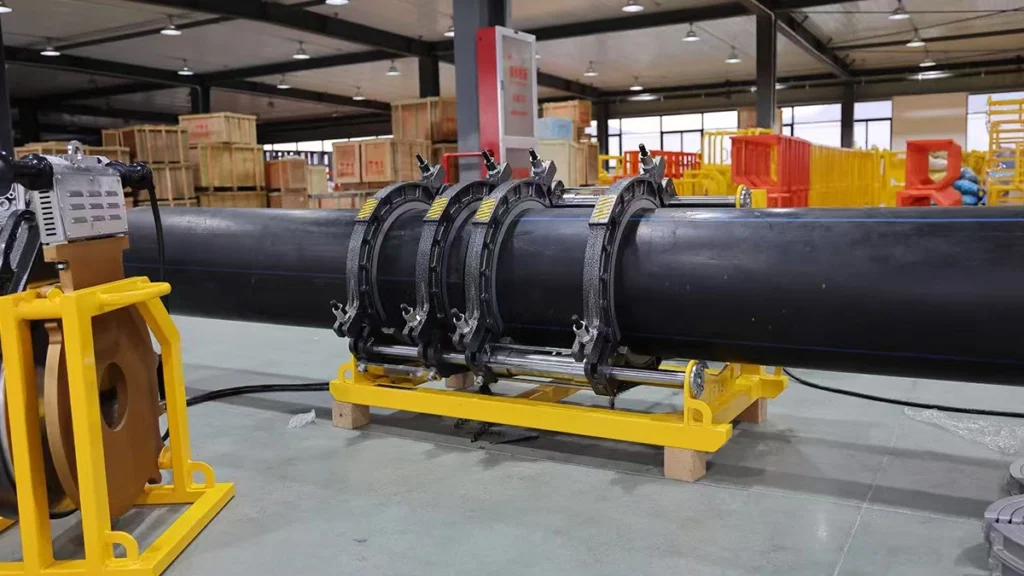
Large diameter HDPE solves this with thermal butt fusion. Pipe ends are planed smooth, heated against a plate to roughly 200-220°C, and pressed together under controlled pressure. As the molten polyethylene cools, the molecular chains entangle across the interface, creating one continuous pipe.
Destructive testing proves the fused joint is actually stronger than the pipe itself. If you stress the pipe to failure, it will yield in the body, not the joint. This eliminates root intrusion and groundwater contamination, creating the truly sealed system required for environmental protection.
—
Municipalities are stuck between expanding capacity for growing populations and patching up failing legacy systems. Large diameter HDPE pipe applications offer the versatility to tackle both clean water delivery and aggressive wastewater removal.
Getting drinking water from treatment plants to city centers requires pipes that are durable and hygienically safe. JINQUAN’s large diameter HDPE pipes (DN1000 to DN3000) use virgin PE100 resin compliant with international hygiene standards like ISO 4427 and WRAS.
Unlike cement-lined iron pipes, which can alter taste or leach minerals, HDPE is chemically inert and doesn’t support bacterial growth. These pipes are usually co-extruded with blue stripes or a full blue outer layer for easy identification. With pressure ratings up to PN25 (though PN10-PN16 is standard for large diameters), they are perfect for high-volume transmission mains operating under significant pump pressure. And thanks to fused joints, treated water isn’t lost to leakage, saving valuable resources.
Sewer environments are hostile. Anaerobic bacteria produce Hydrogen Sulfide (H2S) gas, which condenses into sulfuric acid on the pipe crown. This “crown corrosion” eats through concrete pipes, causing structural collapse.
HDPE is completely immune to H2S attack. It needs no internal lining or coating to survive septic sewer conditions. For gravity flow sewers and force mains, large diameter HDPE stops raw sewage from leaking into the water table.
For stormwater, where pressures are lower, engineers often use structured wall or Double Wall Corrugated (DWC) HDPE pipes. These provide the necessary Ring Stiffness (SN4 or SN8) to handle soil loads but weigh a fraction of solid wall pipes, making them ideal for culverts and storm drains up to DN3000.
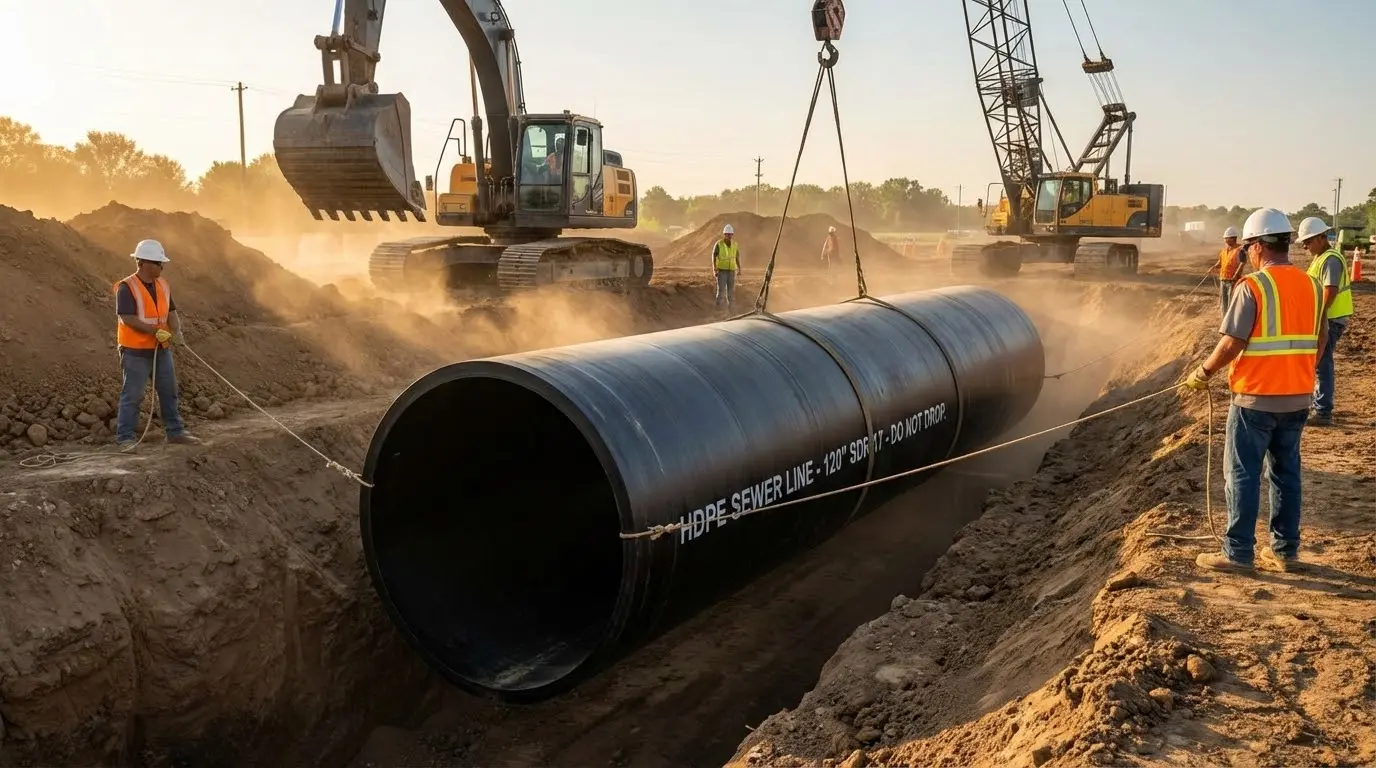
Large diameter HDPE pipe applications for municipal sewer installation
Digging open trenches in busy cities causes traffic chaos and massive restoration costs. Large diameter HDPE is the go-to material for trenchless methods like sliplining and pipe bursting.
In sliplining, a slightly smaller HDPE pipe (the liner) is pulled inside a failing concrete or steel host pipe. Because HDPE is flexible and smooth, long continuous strings can be pulled right through the existing infrastructure. The gap is then grouted to transfer loads. The result? Structural integrity is restored without tearing up the street.
JINQUAN produces PE100 pipe specifically sized for these jobs, ensuring the optimal clearance (usually 10% of OD) for a successful pull.
With climate change driving more severe storm surges, municipalities are turning to large diameter HDPE pipes for underground retention and detention tanks.
By manifolding large pipes (DN1200+) together, engineers create massive underground storage volumes. These capture stormwater runoff during peak flow and release it slowly. The systems are modular, leak-proof, and sit easily under parking lots or parks. Unlike concrete tanks, HDPE systems assemble quickly and won’t crack if the surrounding soil gets saturated and shifts during a flood.
—
In the industrial and mining sectors, pipes transport far more than just water. They handle abrasive slurries, corrosive acids, and hazardous waste. Standard metal pipes might last months here; HDPE lasts years.
Mining operations move tailings, mineral concentrates, and sand slurries that act like liquid sandpaper. Pipe wear is a massive operational expense.
Field data shows HDPE has an abrasion resistance four times higher than steel pipe. The molecular structure of PE100 allows the material to absorb the impact of abrasive particles and rebound, rather than chipping or pitting like metal. For slurry lines, JINQUAN recommends lower SDR ratings (thicker walls, e.g., SDR11 or SDR9) to provide a sacrificial wear allowance while keeping pressure capability high.
Chemical plants and power stations generate effluents loaded with acids, alkalis, and salts. HDPE resists a huge spectrum of chemicals across the full pH range (0-14). It effectively handles:
While HDPE is robust, always check JINQUAN’s chemical resistance chart for hydrocarbons or solvents at high temperatures, as these can cause swelling. But for the vast majority of inorganic chemical waste, HDPE is the industry standard.
Landfills produce leachate, a toxic liquid formed when rainwater filters through waste. This must be collected and treated to protect groundwater. Large diameter HDPE pipes, often perforated, are installed at the base of landfill cells to capture this fluid.
At the same time, solid wall HDPE pipes extract biogas (methane) from decomposing waste. The HDPE pipe’s flexibility lets it survive the significant settling and shifting inside a landfill pile without shearing, keeping the gas collection system intact.
Large industrial complexes need fire suppression systems that work every time. Underground fire mains must deliver high volumes of water instantly, even after sitting idle for years.
Steel fire loops often suffer from internal corrosion that restricts flow or clogs sprinkler heads with rust flakes during an emergency. FM Approved or standard ISO-compliant HDPE pipes ensure a corrosion-free flow path. Their fused joints remove the risk of leaks compromising system pressure, ensuring fire pumps deliver full capacity when it counts.
—
Marine environments are brutal on infrastructure. Saltwater eats steel, and waves destroy rigid joints. Large diameter HDPE pipe applications in marine engineering succeed by leveraging the material’s flexibility, buoyancy, and chemical inertness.
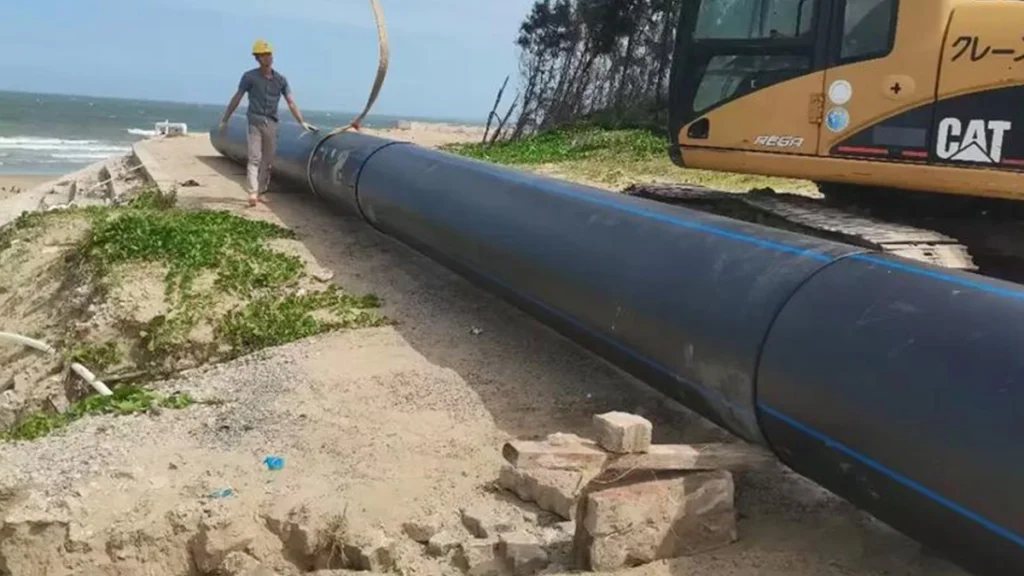
Desalination plants need massive intake pipes to draw seawater and outfall pipes to discharge brine. Installing these largediameter HDPE pipelines (often DN1000 to DN2500) relies on the “float-and-sink” method.
JINQUAN pipes are fused into long strings (hundreds of meters) on land or a barge. Since HDPE’s density (approx. 0.95 g/cm³) is lighter than seawater, the pipe floats. Concrete ballast weights are attached at calculated intervals. The pipe is then towed into position and filled with water, sinking in a controlled manner to the seabed. This avoids expensive underwater welding or divers bolting flanges.
Dredging involves pumping sand and water mixtures from the seabed to the shore. These pipelines must float on the surface and handle constant wave motion.
HDPE dredging pipes use floaters to stay buoyant. They must be highly abrasion-resistant to handle high-velocity sand slurry. The pipe’s inherent flexibility allows it to ride the waves without mechanical ball joints, which are high-maintenance and prone to leaks.
Crossing a river with a pipeline is a logistical headache. Traditional methods involve bridges or cofferdams. With large diameter HDPE, engineers can create an underwater syphon.
Continuous lengths of fused pipe are sunk into a trench dredged in the riverbed. The pipe conforms to the river bottom profile. Once installed and covered, it is safe from anchor drag and currents. This method is significantly faster and cheaper than aerial crossings or tunneling.
—
Getting the specification right is vital for both performance and budget. Over-specifying wall thickness wastes money and reduces flow; under-specifying invites failure.
In thermoplastic piping, size is defined by Nominal Diameter (DN), which usually refers to the Outside Diameter (OD) in millimeters.
For instance, a DN630 HDPE pipe has an outside diameter of 630mm. But the internal flow area depends on the pressure rating (SDR). A DN630 SDR17 pipe will have a larger internal bore than a DN630 SDR11 pipe.
The Standard Dimension Ratio (SDR) is simply the ratio of the HDPE water pipe’s diameter to its wall thickness (SDR = OD / e).
For large diameter pipes, shifting from SDR11 to SDR17 cuts material weight and cost while boosting hydraulic capacity. Engineers should verify the maximum operating pressure (including surge) to avoid over-designing.
—
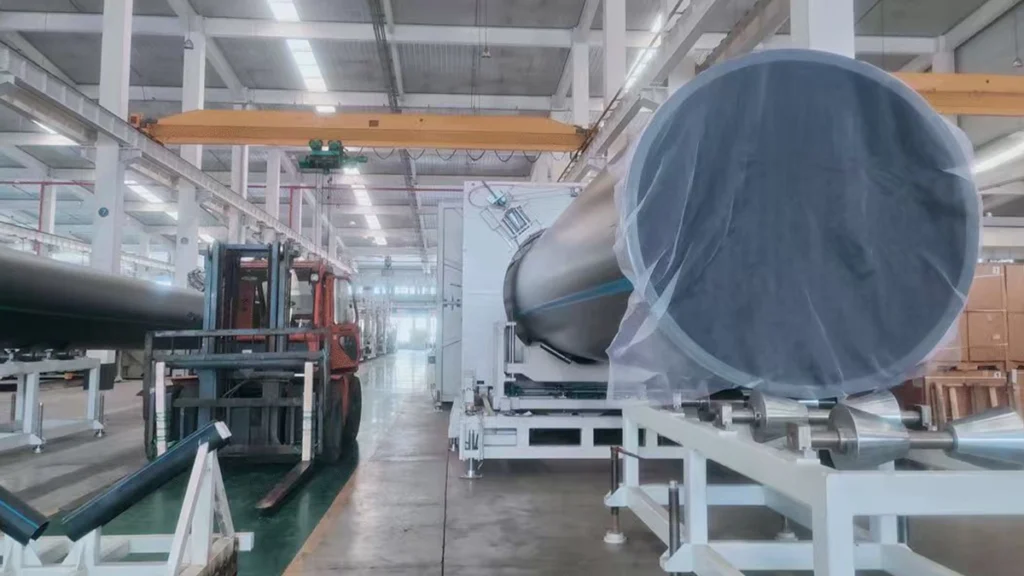
Making large diameter HDPE pipe takes specialized heavy machinery and strict process control. JINQUAN’s facility handles the unique challenges of manufacturing and shipping these massive pipes.
JINQUAN operates a 200-acre facility with an annual output topping 100,000 tons. Our production lines use advanced extrusion technology (comparable to Battenfeld-Cincinnati systems) capable of producing pipes up to DN1600mm and beyond.
Key manufacturing features include:
Quality can’t be inspected into a pipe; it has to be built in. But verification is mandatory.
Shipping large diameter HDPE pipes (like DN1000 or DN3000) can get expensive because they take up so much volume—essentially, you’re paying to ship air.
JINQUAN uses a “Pipe Nesting” strategy to optimize freight. We slide smaller diameter pipes inside larger ones (e.g., loading DN315 inside DN630, and DN110 inside DN315). This telescopic loading method can double or triple the pipe footage in a single 40ft High Cube container, significantly lowering the landed cost per meter for importers.
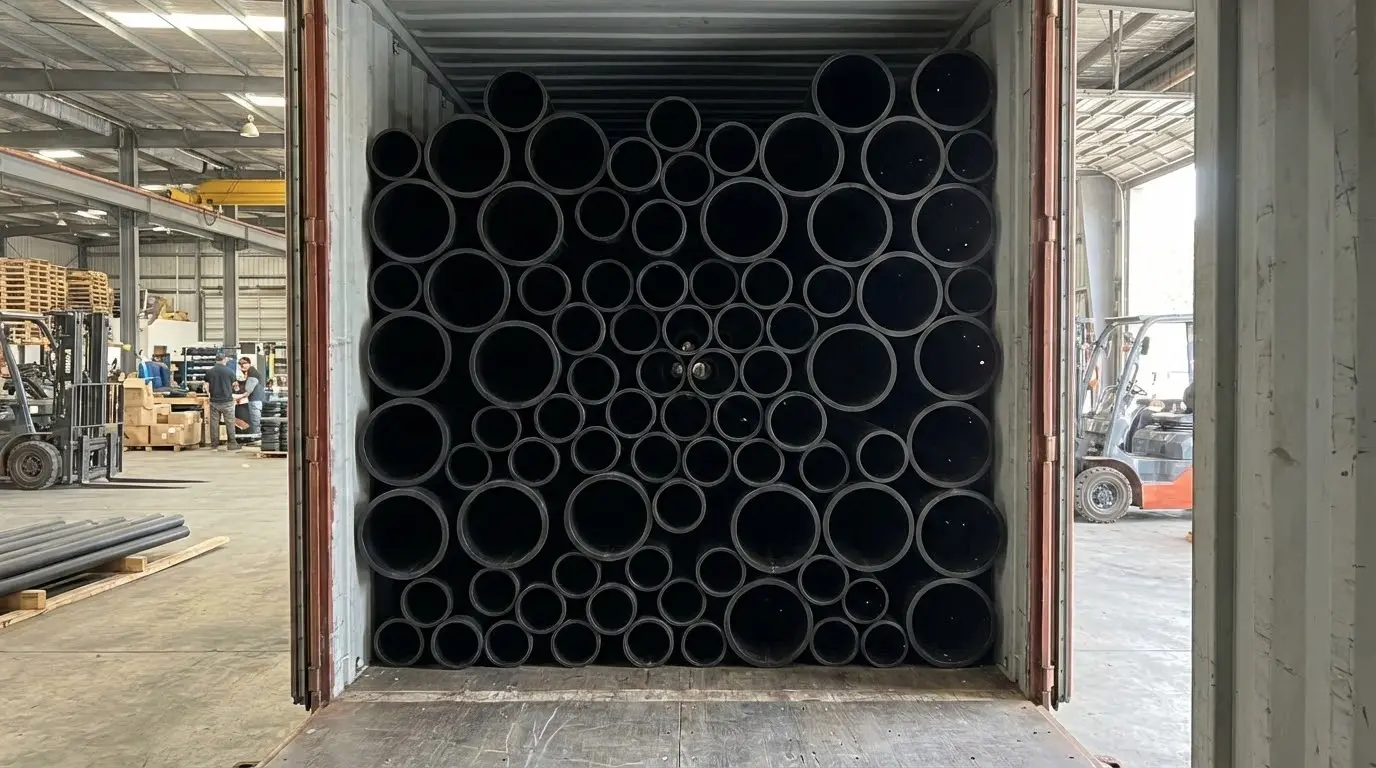
Logistics and nesting of large diameter HDPE pipe applications
—
Q1: What is the maximum diameter of HDPE pipe JINQUAN can manufacture?
For pressure applications, JINQUAN manufactures HDPE pipes with diameters up to DN3000 mm. For non-pressure applications such as drainage and culverts, we supply Double Wall Corrugated (DWC) pipes up to DN1200 mm.
Q2: How are large diameter HDPE pipes transported and shipped internationally?
Pipes are usually cut to 5.8m (for 20ft containers) or 11.8m (for 40ft containers). To cut ocean freight costs, we use “nesting”, loading smaller pipes inside larger ones. For truly massive projects, we can use bulk break shipping or open-top containers for diameters that exceed container widths.
Q3: Can large diameter HDPE pipes be connected to existing concrete or steel pipes?
Yes. The standard method uses a flange adapter (stub end) with a metal backing ring on the HDPE side. This bolts directly to the flange of the steel or ductile iron pipe. For lower pressure repairs, mechanical couplings designed to grip HDPE and other materials are also an option.
Q4: What is the difference between PE80 and PE100 for large diameter pipes?
PE100 is a higher-density, higher-strength material (MRS 10.0 MPa) compared to PE80 (MRS 8.0 MPa). This means a PE100 pipe can have a thinner wall than a PE80 pipe for the same pressure rating, giving you a larger internal bore, higher flow capacity, and lighter weight. PE100 is the modern standard for large diameters.
Q5: Is large diameter HDPE suitable for above-ground installation exposed to sunlight?
Yes, as long as the HDPE pipe contains at least 2-2.5% finely dispersed carbon black. This acts as a powerful UV stabilizer, protecting the polymer chains from degradation. JINQUAN’s black PE100 pipes are engineered for indefinite outdoor storage and above-ground service without losing mechanical properties.
—
The shift toward large diameter HDPE pipe applications is a fundamental upgrade in how we build global infrastructure. Whether it’s for municipal water transmission, industrial slurry transport, or marine outfalls, HDPE delivers a mix of flexibility, corrosion immunity, and leak-free integrity that rigid materials simply cannot match.
By choosing JINQUAN as your manufacturing partner, you get access to premium PE100/PE100-RC solutions, sized exactly to your hydraulic needs (DN500-DN1600+). Our strict adherence to ISO 4427 standards, combined with strategic nesting logistics, ensures you receive a product that is technically superior and commercially competitive.
Ready to secure your infrastructure for the next century?
Contact JINQUAN Plastic Industry Co., Ltd. today. Our engineering team is standing by to provide custom pressure ratings, detailed technical data sheets, and a factory-direct quote that makes sense for your budget.