Address
Zhengzhou, Henan, China
Work Hours
Monday to Friday: 7AM - 7PM
Weekend: 10AM - 5PM
Address
Zhengzhou, Henan, China
Work Hours
Monday to Friday: 7AM - 7PM
Weekend: 10AM - 5PM


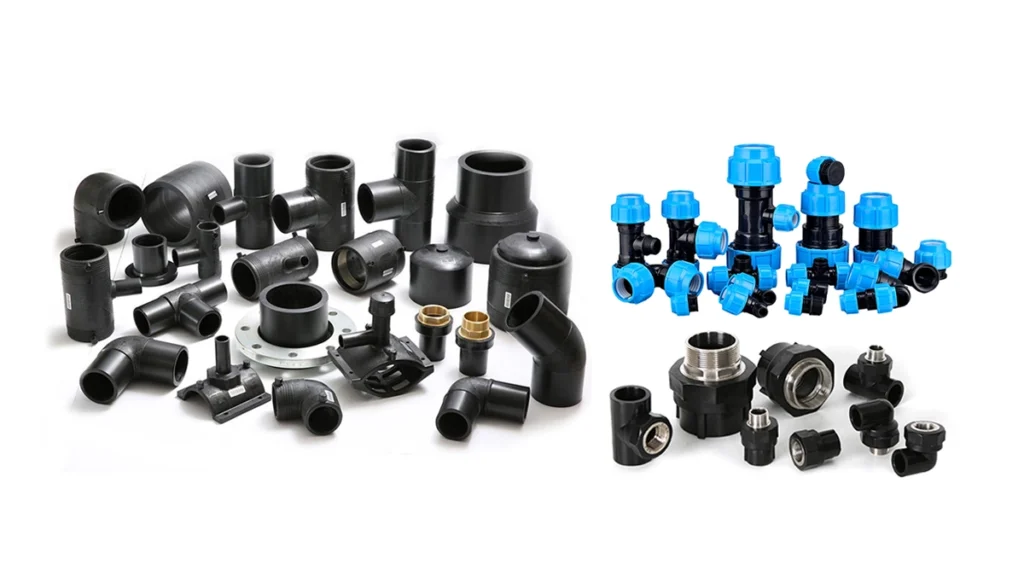
In modern infrastructure, piping systems are hailed as the “blood vessels” of cities. As pipeline engineering demands grow increasingly complex, material selection often determines a project’s durability, safety, and overall efficiency. With continuous advancements in engineering technology, traditional pipeline materials are gradually being replaced by polymer materials with superior performance. Among these, the HDPE pipe fittings system, leveraging its unique material properties and engineering advantages, has become the mainstream choice across multiple sectors including municipal water supply and drainage, industrial conveyance, gas pipelines, agricultural irrigation, and environmental protection projects.
HDPE pipe fittings are specialized connectors used to join, redirect, branch, or seal high-density polyethylene pipelines. Serving as the “joints” and “connective elements” of piping systems, they not only ensure smooth fluid diversion and branching but also directly impact the system’s sealing integrity, pressure resistance, and long-term operational performance.
HDPE pipe fittings are critical components of the entire HDPE piping system, ensuring the pipeline network forms a complete, sealed, and reliable delivery system. Common types include elbows, flanges, tees, cross tees, reducers, and end caps. Based on connection methods, they can be categorized into the following types.
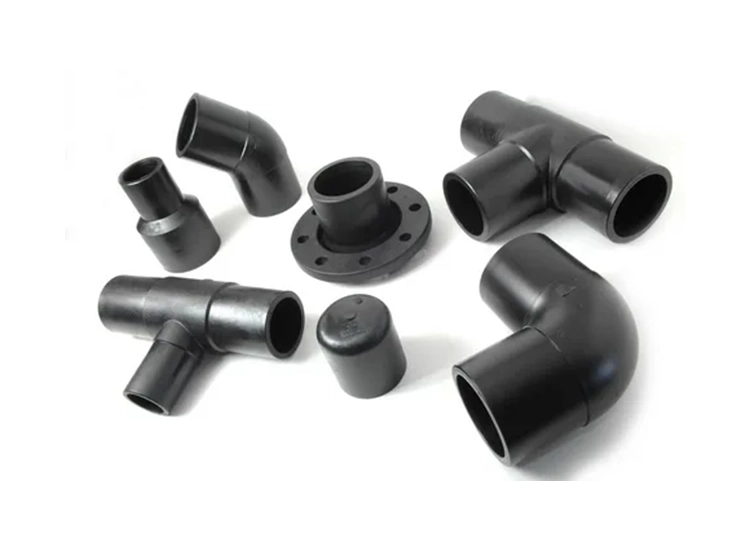
Using a dedicated butt fusion welding machine, the pipe fittings and pipe ends are simultaneously heated and melted, then pressed together under pressure to form an integral joint. This method achieves high connection strength and is the primary joining technique for HDPE piping systems.
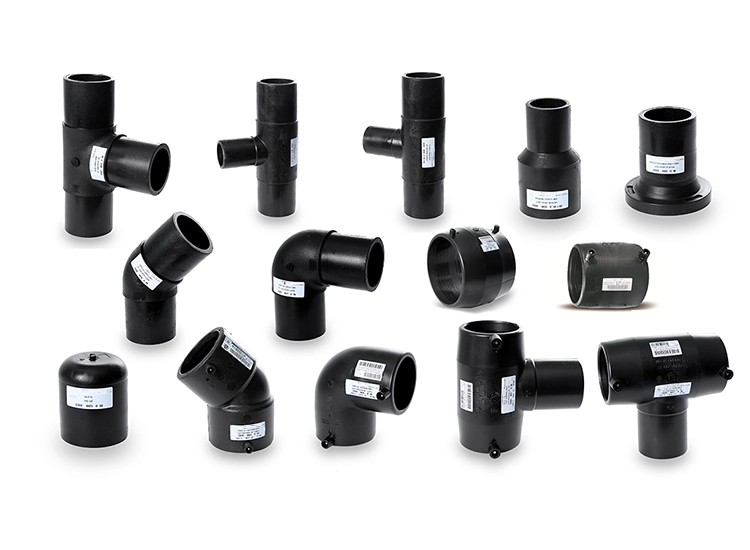
HDPE electrofusion fittings incorporate internal resistance wires that fuse the fittings to pipes when heated by a dedicated power source. They are particularly suitable for emergency repairs in confined spaces, branch connections, and joining pipes of different diameters or brands.
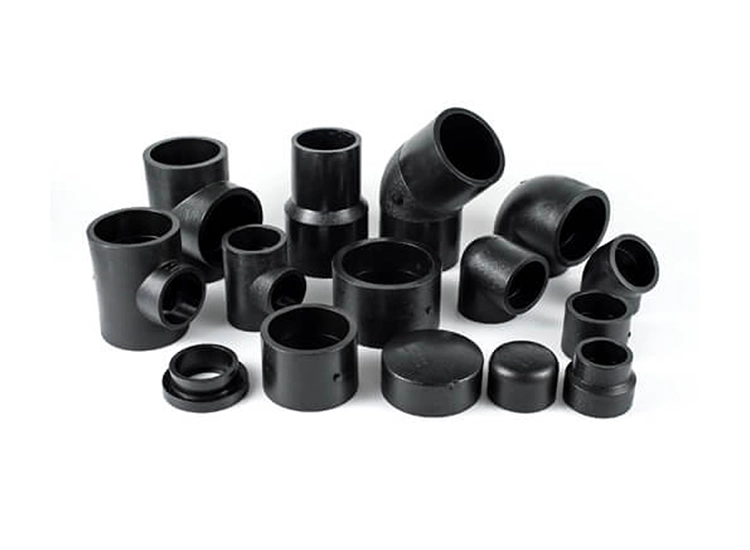
After simultaneously heating the outer wall of the pipe and the socket inner wall of the fitting, socket fusion is performed. This method is commonly used in small-diameter pipe systems (typically DN ≤ 110 mm) and offers relatively simple operation.
Compression fittings typically refers to pipe fittings made of polypropylene material that achieve sealing through mechanical compression (such as nuts or ferrules). They are commonly used for temporary, removable pipe connections or for interfacing with instruments and equipment.
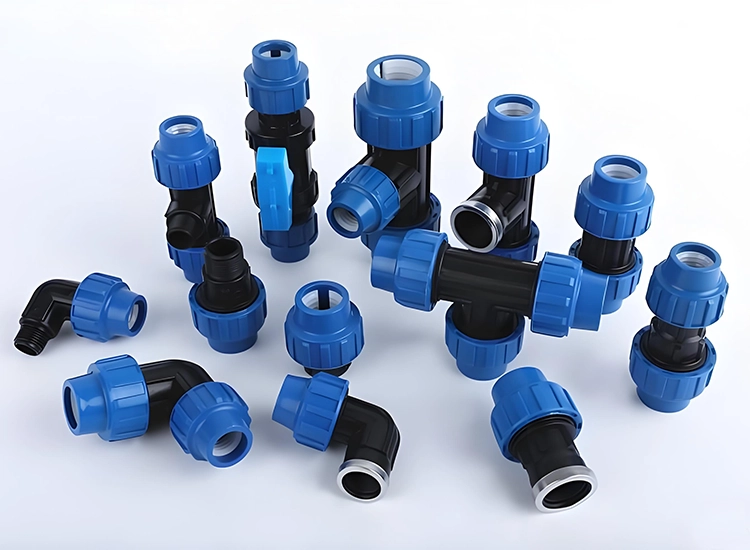
HDPE threaded pipe fittings feature metal or plastic threads at their ends, designed for connecting to equipment, valves, or pipes made of other materials that have threaded interfaces, thereby facilitating transitions between dissimilar materials.
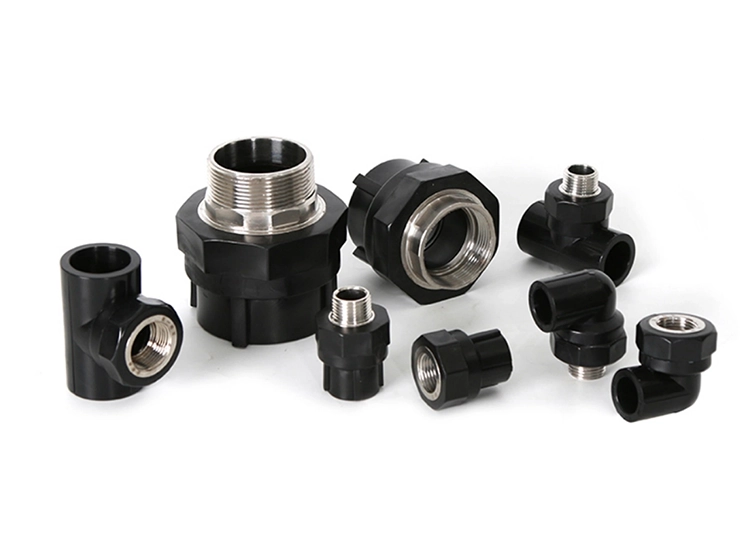
Custom-fabricated fittings produced from HDPE sheets or pipes through cutting, welding, or other methods to meet specific engineering requirements (such as non-standard dimensions or complex structures), fulfilling bespoke design solutions.
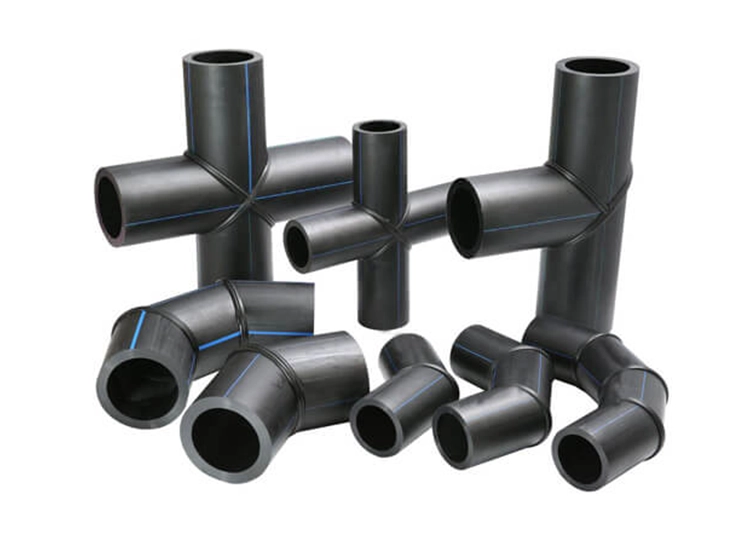
HDPE pipe fittings are manufactured from the same raw material as HDPE pipes—high-density polyethylene. They exhibit exceptional chemical stability, outstanding mechanical toughness, low physical density, and high sustainability. HDPE fittings combine durability, ease of installation, and environmental friendliness, featuring the following characteristics:
The outstanding features of HDPE pipe fittings make them the preferred choice across numerous fields, with extensive applications in the following areas:
HDPE fittings serve as the core connecting components in modern municipal water supply networks. Thanks to their superior leak-free connection performance and hygienic, environmentally friendly material properties, HDPE fittings are widely used to construct secure water delivery systems from water treatment plants to end users. They are not only employed in laying new water supply trunk lines but also play a crucial role in retrofitting existing pipelines. Through flexible and reliable connection methods, they effectively resolve common issues in traditional piping systems, such as joint leakage and corrosion-induced water contamination.
In modern irrigation and agriculture, HDPE fittings serve as essential tools for achieving efficient water conservation and precise water resource management. Their lightweight, corrosion-resistant, and easy-to-install characteristics enable drip irrigation and sprinkler systems built with HDPE fittings to be rapidly deployed across large-scale farmlands, greenhouses, or orchards. These fittings ensure stable operation of irrigation networks in complex field terrains and environments with prolonged exposure to fertilizers and pesticides, significantly enhancing water resource utilization efficiency and supporting the advancement of precision agriculture.
HDPE fittings play a crucial role in sewage and drainage systems, particularly for conveying corrosive domestic sewage and industrial wastewater. Their fusion-welded sealed connections fundamentally eliminate the risk of secondary pollution to soil and groundwater from sewage leakage. Additionally, the exceptional chemical resistance and flexibility of HDPE fittings enable them to withstand complex wastewater constituents and potential foundation settlement, making them an ideal choice for constructing durable, reliable urban underground drainage corridors.
In natural gas distribution, HDPE fittings have become standard equipment for medium- and low-pressure gas networks. Their key advantage lies in creating an integral, leak-free system through fusion bonding, significantly enhancing gas transmission safety. The toughness of HDPE fittings effectively withstands unexpected impacts from ground movement and third-party construction, reducing the risk of gas leaks caused by pipeline damage. Additionally, specialized electrofusion HDPE fittings enable safer and more efficient repairs under pressure and connections for new users.
Facing the most demanding mining and industrial environments, HDPE fittings demonstrate exceptional durability. In mining operations, highly abrasion-resistant HDPE fittings are used to construct long-distance tailings and slurry conveyance pipelines, significantly outlasting traditional metal pipes. In industrial settings such as chemical plants and power stations, HDPE fittings safely transport various process waters, acid-alkali solutions, and industrial wastewater thanks to their outstanding chemical corrosion resistance. They serve as critical infrastructure components ensuring continuous production and environmental compliance.
In highly corrosive marine environments, HDPE fittings demonstrate exceptional advantages. They are extensively used in intake and discharge pipelines for desalination plants, water supply systems for ship docks, and subsea pipeline networks for marine aquaculture facilities. HDPE fittings not only withstand long-term exposure to seawater corrosion but also facilitate complex subsea installation and laying due to their outstanding flexibility and lightweight properties. Specialized large-diameter HDPE marine buoy pipe fittings serve as core connecting components for constructing marine structures such as breakwaters and floating docks.
The use of HDPE pipe fittings delivers comprehensive and significant advantages for pipeline engineering. Its core value lies in combining material science with connection technology to build safer, more economical, and more durable fluid delivery systems.
First, the fusion connections formed through heat fusion or electrofusion achieve complete molecular-level integration between pipes and fittings. This virtually eliminates the risk of joint leakage, substantially enhancing the system’s sealing reliability and safety. This high-strength, corrosion-resistant connection method fundamentally slows the aging rate of the piping system, extending its design service life to over 50 years in various harsh environments and significantly prolonging the entire system’s operational lifespan.
Thanks to exceptional durability and extremely low failure rates, the frequency of maintenance and replacements required throughout the system’s lifecycle is greatly reduced, effectively saving long-term maintenance and operational costs. From a construction perspective, HDPE fittings are lightweight and feature highly standardized connection processes, supporting rapid butt fusion or electrofusion operations. This significantly boosts installation efficiency, helping to shorten project timelines and reduce labor costs.
Overall, while initial material costs may be relatively higher, the ultra-long lifespan, minimal maintenance requirements, and efficient installation characteristics of HDPE piping systems often result in lower total lifecycle costs compared to traditional material systems. This achieves an optimal balance between long-term economic benefits and engineering reliability.
The installation of HDPE pipe fittings is critical to realizing their performance advantages, primarily relying on body connection technology that forms permanent seals and necessary mechanical connection methods. Selecting the appropriate installation method depends on project requirements, site conditions, pipe diameter, and budget considerations. Below are three core installation methods.
Butt fusion welding is the most commonly used and reliable connection method. Its principle involves using a specialized butt fusion welding machine to simultaneously heat the ends of pipes and fittings to a molten state. The components are then rapidly joined under preset pressure and held to cool, causing them to fuse completely at the molecular level. This creates a seamless, leak-free joint with strength matching the pipe material itself. This method delivers exceptionally high joint strength and permanent sealing, making it the preferred technology for long-distance transmission pipelines and mainline installations. Success hinges on the condition of the butt fusion welding machine, precise control of heating plate temperatures, and standardized operational procedures.
Electrofusion welding is particularly suitable for applications with limited space, where pipes are difficult to move, or where branch connections or emergency repairs are required. HDPE electrofusion fittings contain embedded resistance wires. During installation, a dedicated electrofusion welder applies electrical current to heat the fitting, simultaneously melting its interior and the outer surface of the contacting pipe. Upon cooling, this forms a high-strength sealed connection. Advantages of electrofusion welding include minimal space requirements, reduced susceptibility to environmental factors, relatively straightforward operation, and ease of standardization. However, strict control over cleanliness and cooling time is essential, and the cost of fittings is typically higher than standard butt fusion fittings.
This method is employed when connecting to existing piping systems of different materials (such as steel pipes, cast iron pipes, valves, or equipment interfaces), or when engineering requirements call for removable temporary connections. Common mechanical connectors include flanges, threaded fittings, and compression fittings. The principle involves creating a compression seal between the pipe’s outer wall and the fitting through mechanical clamping force (e.g., bolts, collars). While offering rapid installation and flexibility, this method typically does not form an integral joint. Its long-term sealing integrity and reliability depend on seal quality and sustained mechanical pressure. Consequently, it is primarily used at system ends, transition points, or for maintenance scenarios, and is not the preferred choice for mainline connections in HDPE piping systems.
Selecting an HDPE pipe fittings manufacturer is a systematic decision-making process that directly impacts the quality, cost, and long-term operational safety of engineering projects. When choosing an HDPE pipe fittings manufacturer, price quotes alone are not the decisive factor; product performance, production and technical expertise, and certification qualifications are all critical considerations.
Technical and production capabilities determine product reliability and customization levels. The core lies in whether the manufacturer possesses advanced material formulations, precision mold manufacturing, and strict production process control. A reliable manufacturer should ensure timely and consistent product supply. This requires not only large-scale automated injection molding production lines to maintain high output capacity but also a comprehensive quality inspection system covering everything from incoming raw material testing to finished product trials.
With decades of expertise in pipe and fitting production, Jinquan holds multiple international certifications including CE and ISO. Its integrated industrial chain spans from raw material modification to finished product manufacturing. Offering a comprehensive range of HDPE fittings, Jinquan prioritizes production process stability and product performance consistency. The company maintains dedicated technical support teams that provide systematic solutions—from product selection and design to installation guidance—making it a trusted partner for projects.
The pricing of HDPE pipe fittings is not determined by a single factor but is influenced by multiple factors such as raw material costs, production processes, specification parameters, and market supply and demand. Understanding these factors helps strike a more reasonable balance between budget and project requirements.
HDPE pipe fittings are not merely simple connectors; they are core elements determining the long-term performance and economic efficiency of the entire piping system. With their outstanding corrosion resistance, leak-free body connections, extended service life, and significant lifecycle cost advantages, they have been adopted across numerous demanding sectors—from municipal water supply and gas distribution to mining and marine engineering. Selecting appropriate HDPE pipe fittings and employing the correct installation methods—such as butt fusion, electrofusion welding, or mechanical connections—is the technical key to ensuring system reliability.
Fill out the form and our team will contact you shortly.