Address
Zhengzhou, Henan, China
Work Hours
Monday to Friday: 7AM - 7PM
Weekend: 10AM - 5PM
Address
Zhengzhou, Henan, China
Work Hours
Monday to Friday: 7AM - 7PM
Weekend: 10AM - 5PM

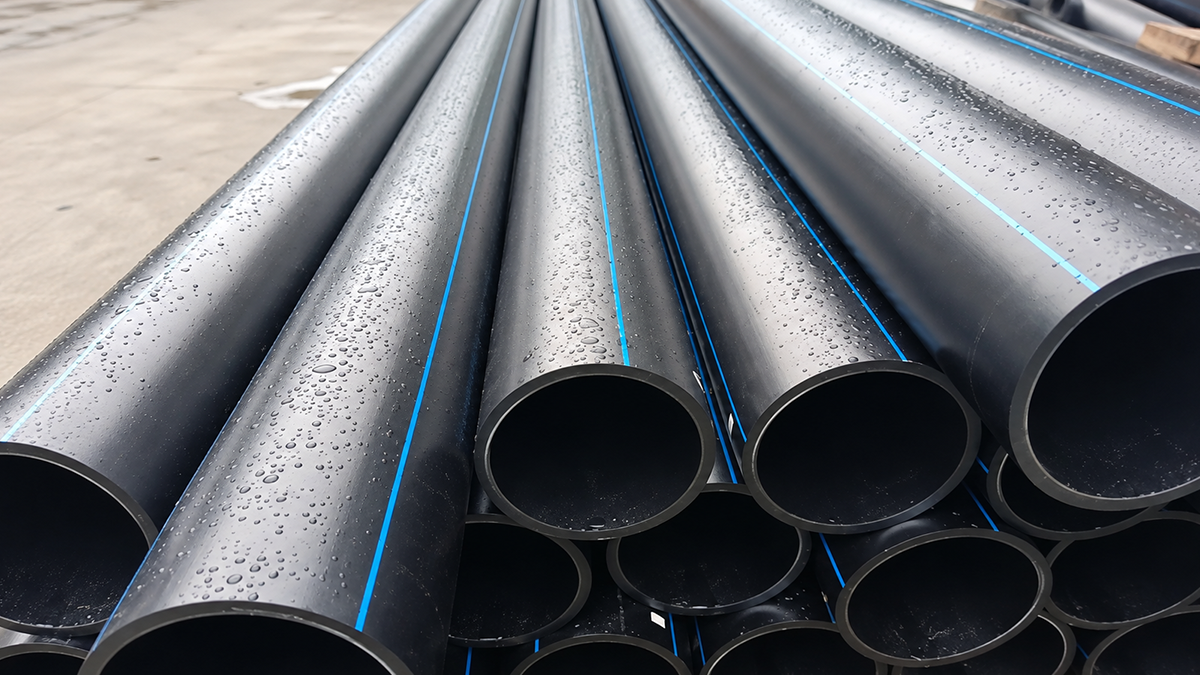
HDPE Pipes and Fittings for Peru helps buyers choose pipe grades, SDR/PN, fittings, and joining methods for mining and water supply systems, while comparing costs, lead times, and supplier quality requirements.
High-Density Polyethylene (HDPE) pipes and fittings serve as specialized thermoplastic conduits engineered specifically for fluid and gas transportation. When looking at industrial and infrastructure developments across Peru, contractors heavily rely on systems extruded from PE100 resin. Why? This material boasts a Minimum Required Strength (MRS) of 10.0 MPa, firmly establishing it as the benchmark for modern, high-pressure networks. For less demanding, lower-pressure scenarios, PE80 resin (MRS 8.0 MPa) remains a viable alternative.
These product lines span an impressive size range, featuring a Diameter Nominal (DN) from 16mm all the way up to a massive 3000mm. A robust ecosystem of fittings—butt fusion, electrofusion, socket fusion, fabricated, and PP compression types—supports the entire network. Within Peru’s unique geographical context, engineers frequently specify HDPE for demanding high-altitude mining zones and the unforgiving Andean terrain. The material naturally resists UV degradation during above-ground deployment. Even more importantly, its inherent flexibility absorbs seismic shocks, while its freeze-break resistance handles the brutal temperature swings typical of elevated Peruvian landscapes.
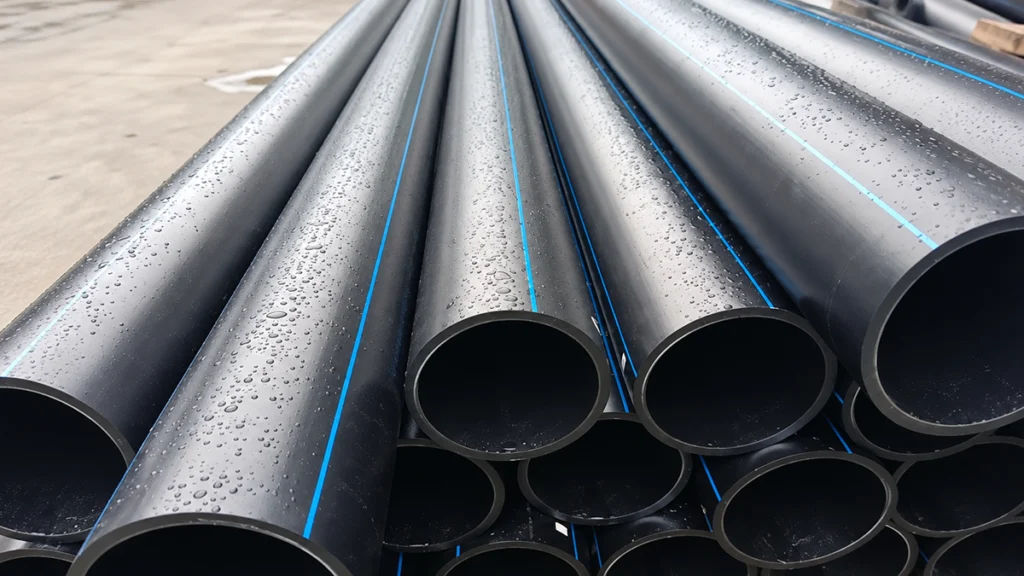
Compared to legacy piping materials, HDPE introduces a suite of mechanical and chemical benefits tailored specifically for the rugged operational realities of Peruvian EPC projects. Tipping the scales at a density of just 0.95 g/cm³, it weighs about 30% less than PVC and represents a mere fraction of the weight of steel. Consider a standard 100-foot run of small-diameter pipe: the HDPE version weighs roughly 30 lbs. An identical length in steel easily tops 500 lbs. This dramatic weight reduction slashes heavy-lifting requirements on-site and cuts transportation expenses when navigating treacherous mountain roads.
Temperature resilience is another major factor, with the polymer functioning flawlessly between -40°C and +60°C. When deployed in mining sectors to transport highly abrasive slurries, HDPE outlasts traditional steel pipes by up to four times. It also handles aggressive internal flow rates reaching 14 feet per second. Contrast that with PVC, which generally caps out at 5.5 feet per second before risking surge damage.
Comparison: HDPE vs. Steel vs. PVC in Peru Project Conditions
| Feature | HDPE (PE100) | Steel | PVC / CPVC |
|---|---|---|---|
| Durability in Slurry | Excellent (High abrasion resistance) | Poor (Prone to wear and corrosion) | Moderate (Brittle under impact) |
| Flexibility | High (Seismic resistant, bends easily) | Low (Rigid, requires exact fittings) | Low (Rigid, cracks under stress) |
| Corrosion Resistance | Excellent (No rust, chemical resistant) | Low (Requires coating/lining) | Excellent (Chemical resistant) |
| Installation Cost | Low (Lightweight, heat fused) | High (Heavy lifting, welding required) | Low (Solvent cement/rubber rings) |
Pinning down the exact HDPE pipe specification means mastering the interplay between wall thickness, pressure limits, and operating temperatures. The fundamental metric here is the Standard Dimension Ratio (SDR)—the direct ratio of the outside diameter (OD) to the pipe’s wall thickness. A lower SDR translates to a thicker wall, which in turn delivers a higher pressure rating (PN).
Engineers must factor in temperature derating for any project exceeding standard testing baselines. Manufacturers establish baseline PN ratings using water at 20°C. So, if a processing plant pushes fluids at 30°C, an SDR 11 pipe—nominally rated for 16 bar—needs a derating adjustment down to roughly 12 or 13 bar to guarantee long-term structural integrity.
PE100 Parameter Table at 20°C
| SDR | PN Rating | Pressure (bar/psi) | Typical Peru Project Use Case |
|---|---|---|---|
| SDR 26 | PN 6.3 | 6.3 bar / 91 psi | Gravity sewage, low-pressure drainage |
| SDR 17 | PN 10 | 10 bar / 145 psi | Municipal water supply, transmission mains |
| SDR 11 | PN 16 | 16 bar / 232 psi | Potable water, mining process water, high-pressure mains |
| SDR 9 | PN 20 | 20 bar / 290 psi | High-pressure process piping, heavy slurry |
| SDR 7.4 | PN 25 | 25 bar / 362 psi | Extreme pressure industrial applications |
A pipeline is only as reliable as its weakest joint. Fortunately, HDPE networks rely on heat fusion rather than mechanical connections that loosen over time. This fusion process yields a monolithic system. The resulting joint ends up as strong as—and often stronger than—the native pipe.
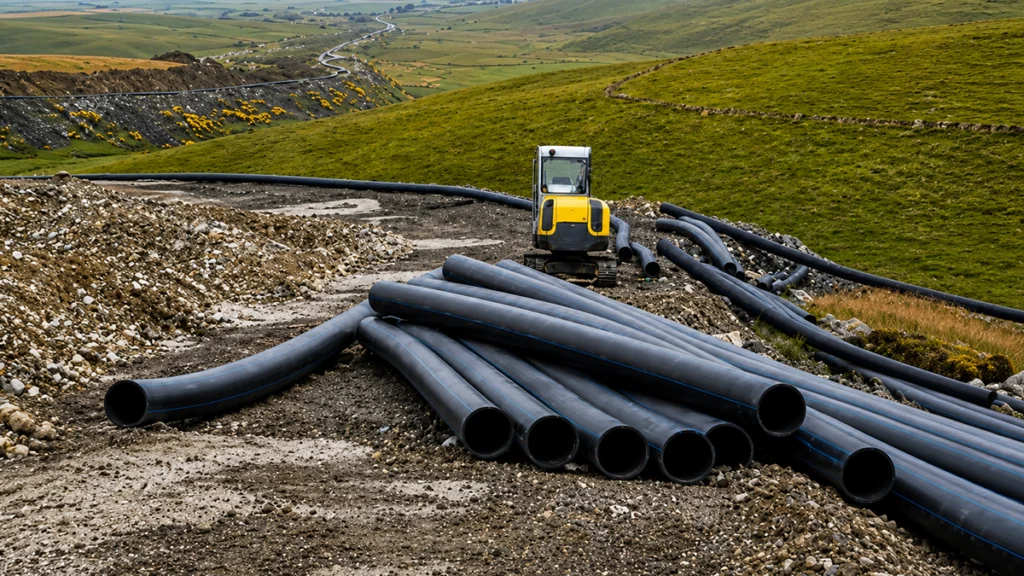
Engineers deploy HDPE systems to tackle highly specific fluid transport bottlenecks across Peru’s diverse industrial landscape.
*Case Example:* Consider a major copper mining operation located in southern Peru. The site needed a new tailings pipeline to transport high-velocity abrasive slurry at a punishing altitude of 3,500 meters. Engineers ultimately specified DN400 SDR 9 (PN20) PE100 pipes. The robust pressure rating easily handled the dense slurry. Meanwhile, the material’s natural flexibility allowed the pipeline to seamlessly follow the severe mountainous topography, completely eliminating the need for expensive, fabricated elbows.
Vague specifications often lead to costly procurement errors in the piping industry. If you want an accurate quote and strict technical compliance, you have to outline comprehensive project parameters from day one.
Buyer RFQ Checklist:
1. Material Grade: State clearly that you require PE100 for contemporary industrial or municipal deployments.
2. Outside Diameter (OD): Always provide dimensions in millimeters (e.g., DN315). Relying on nominal inch sizes without a metric equivalent invites confusion.
3. SDR or PN Rating: Pinpoint the exact wall thickness you need (e.g., SDR 11 / PN16).
4. Fluid Type & Temperature: Document exactly what flows through the system (e.g., highly abrasive slurry at 25°C).
5. Total Length & Fittings: Calculate the precise meterage alongside a strict tally of elbows, tees, and transition flanges.
6. Standards Required: Call out the mandatory manufacturing benchmarks, like ISO 4427 or DIN 8077/8078.
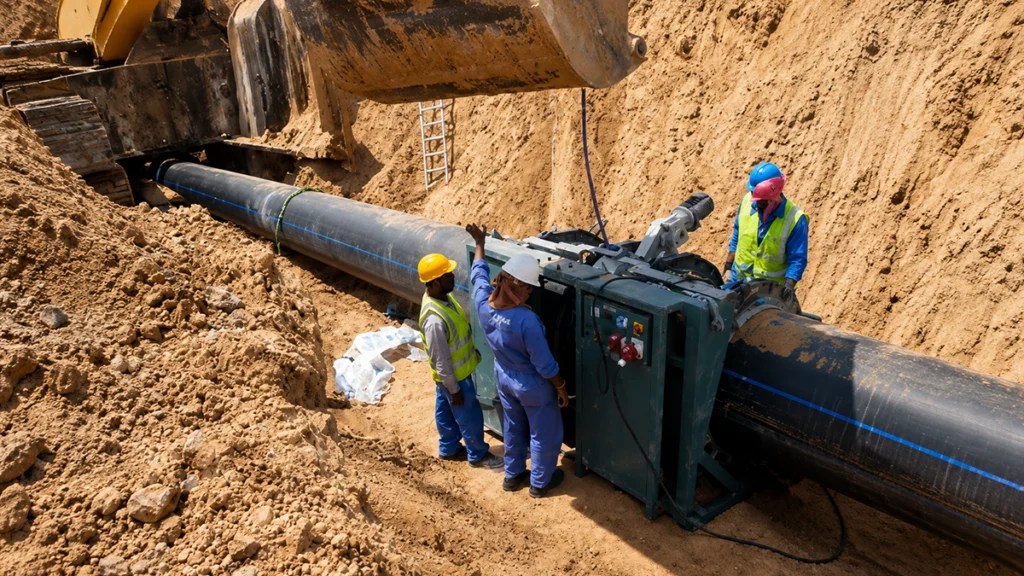
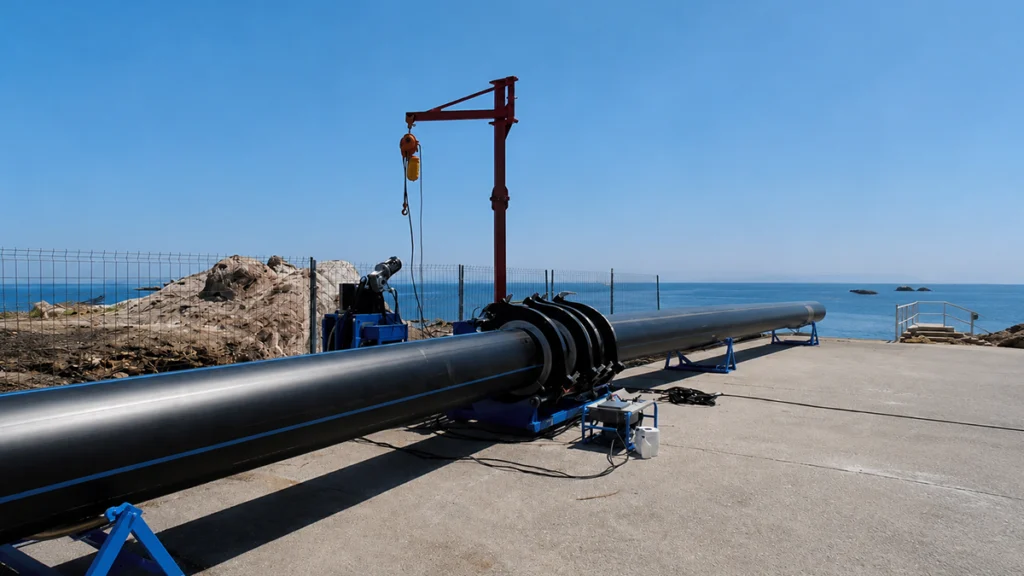
A pipeline’s lifespan relies heavily on the quality of its installation. Field teams must execute the fusion process through rigid procedural steps to secure absolute joint integrity.
Installation Steps:
1. Clean & Align: Lock the pipes firmly into the machine. Any misalignment cannot exceed 10% of the designated wall thickness.
2. Face the Pipe: Run a mechanical facing tool across the pipe ends. Shave them down until they sit smooth, perfectly parallel, and gap-free when joined.
3. Heat: Insert the PTFE-coated heating plate at the specified temperature. Wait until a uniform melt bead forms across both ends.
4. Fuse & Cool: Extract the heater plate, push the molten faces together, and maintain hydraulic pressure until the joint cools naturally. Never shock the plastic by accelerating the cooling process with water.
Field Quality Control (QC):
Understanding the logistics and cost structure of importing HDPE to Peru is essential for accurate project budgeting.
Cost Breakdown:
When calculating the total landed cost, buyers should consider not only the HDPE pipe price but also the HDPE pipe price in Peru, joining equipment, ocean freight, customs duties and taxes, and inland transportation.
Total landed cost = HDPE Pipe Price + HDPE Pipe Fittings Price + Joining Equipment + Ocean Freight + Customs Duties/Taxes + Inland Transport
Shipping Optimization (Nesting):
Because HDPE pipe classifies as volumetric cargo, it consumes a shipping container’s physical space long before maxing out the weight limit. Savvy buyers combat this through “nesting”—the practice of telescoping smaller-diameter pipes directly inside larger ones. Always demand a formal nesting plan for 40-foot High-Cube containers to squeeze maximum value out of your freight spend.
Lead Time and Import Rules:
JINQUAN operates with a standard production lead time of 7 to 15 days for typical sizes and volumes, backed by an annual manufacturing capacity exceeding 100,000 tons. Bringing commercial goods into Peru mandates an active RUC (tax ID). Furthermore, any shipment crossing the $2,000 FOB threshold requires a licensed Peruvian customs broker to officially file an “Importation for Consumption” declaration.
Vetting a manufacturing partner means digging into their technical bandwidth and quality management protocols. A top-tier HDPE pipe supplier in Peru actively mitigates your project risks through total transparency and uncompromising testing standards.
Supplier Evaluation Framework:
Transitioning from the design phase to actual procurement demands a highly structured purchasing workflow.
For contemporary mining and municipal water infrastructure across Peru, PE100 stands out as the optimal choice. It delivers a Minimum Required Strength of 10.0 MPa. This allows engineers to achieve higher pressure ratings using thinner walls compared to older PE80 stock. Consequently, you reduce overall material weight and lower costs without sacrificing durability in rugged, high-altitude environments.
Start by calculating your system’s maximum operating pressure and peak fluid temperature. The Standard Dimension Ratio (SDR) directly dictates your pressure rating (PN). For instance, an SDR 11 pipe handles PN16 (16 bar) at a baseline of 20°C. If your fluid runs hotter than 20°C, you must apply a temperature derating factor. This usually means selecting a pipe with a thicker wall (a lower SDR) to preserve operational safety.
Absolutely. HDPE adapts exceptionally well to Peru’s high-altitude zones. The material functions reliably between -40°C and +60°C and boasts outstanding freeze-break resistance. Furthermore, manufacturers compound the polymer with carbon black, which provides fierce UV resistance. This prevents the material from degrading when exposed to intense mountain sunlight during above-ground installations.
Contractors primarily rely on butt fusion and electrofusion fittings, both of which generate completely homogeneous, leak-proof joints. Butt fusion handles the long, straight main lines, whereas electrofusion excels in tight trenches or complex angles. Flange connections also play a major role when transitioning from an HDPE network to steel pipes, mechanical pumps, or control valves.
Final pricing fluctuates based on global resin markets, specific pipe diameters, and the required SDR. Your actual landed cost in Peru will aggregate the raw materials, fittings, ocean freight, and local customs duties. The most effective way to slash these costs is by demanding a “nesting plan” from your supplier. Telescoping smaller pipes inside larger ones maximizes the available space inside a standard 40-foot shipping container, drastically lowering freight overhead.
Always request ISO 4427 certification (covering water supply systems), ISO 9001 (quality management), and independent CE or SGS test reports. Beyond that, insist on a Material Test Certificate (MTC) tied directly to the specific batch you are purchasing. Finally, ensure the supplier issues a highly detailed commercial invoice and packing list to prevent delays with Peruvian customs.
Yes, HDPE generally outperforms both materials in mining water and slurry applications. It delivers up to four times the abrasion resistance of steel, fighting off the rapid wear caused by heavy slurries. Unlike rigid PVC, HDPE is incredibly flexible. This allows it to absorb seismic impacts and contour to uneven terrain. Plus, its lightweight nature drastically cuts down on heavy equipment and installation costs compared to steel.
Nailing down the right piping infrastructure for Peru’s intense mining and municipal sectors demands rigorous attention to material grades, pressure thresholds, and fusion methodologies. Deploying PE100 HDPE equips projects with unparalleled abrasion resistance, vital seismic flexibility, and robust freeze-break durability. Ultimately, long-term success relies on a few critical factors: accurately matching the SDR to your site’s operating temperature and pressure, enforcing uncompromising field quality control during the fusion process, and aligning with a manufacturer that guarantees full traceability, strict ISO compliance, and highly optimized freight logistics.