Address
Zhengzhou, Henan, China
Work Hours
Monday to Friday: 7AM - 7PM
Weekend: 10AM - 5PM
Address
Zhengzhou, Henan, China
Work Hours
Monday to Friday: 7AM - 7PM
Weekend: 10AM - 5PM

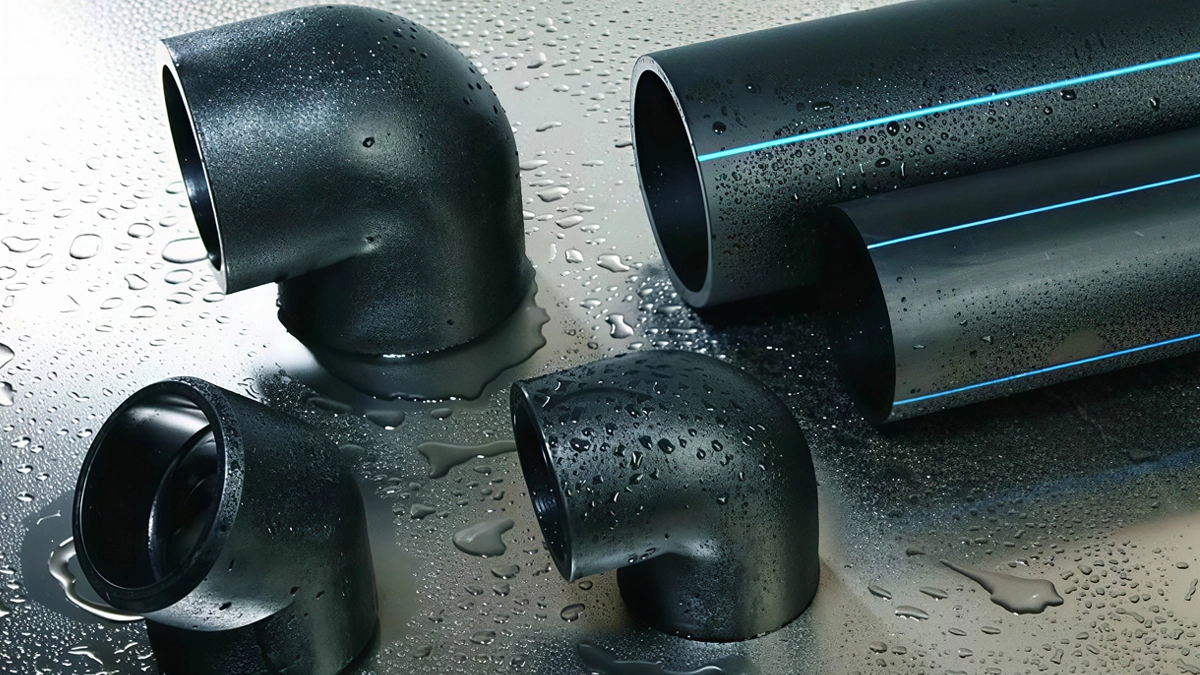
HDPE Pipe and Fittings for Indonesia helps buyers choose the right pipe, fittings, pressure class, and joining method for mining, water, and drainage projects, with practical guidance on standards, pricing, and supplier selection.
High-Density Polyethylene (HDPE) pipe serves as a highly durable, flexible thermoplastic conduit built specifically to handle high-pressure fluids and gases. Manufacturers produce these HDPE pipes using specific material grades like PE80 and PE100. They boast a density between 0.945 and 0.965 g/cm³, alongside an elastic modulus of 800 to 1000 MPa. What does this mean in the field? The unique structural makeup empowers the pipe to absorb massive surge pressures. It shrugs off mechanical impacts that would easily crack rigid alternatives.
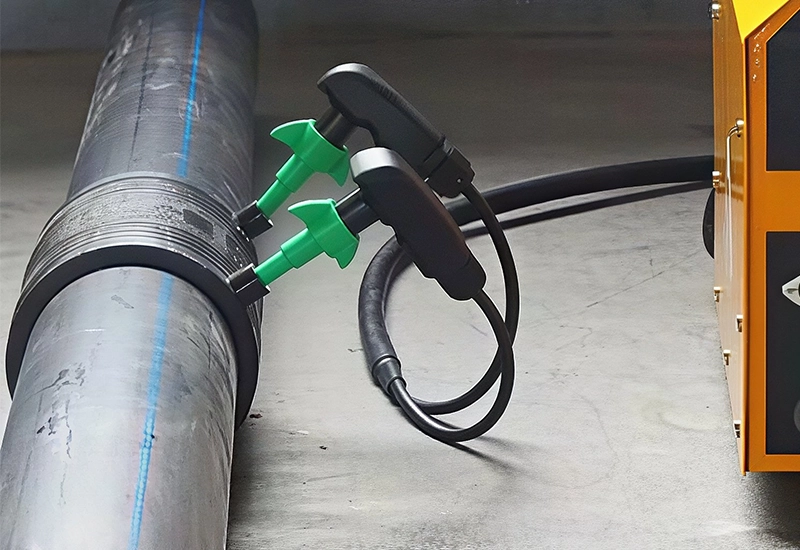
To connect these high density polyethylene pipes, crews use specialized HDPE fittings. These include elbows, tees, reducers, and flanges. Instead of relying on mechanical threads or messy chemical solvents, these components join via thermal fusion—typically butt fusion or electrofusion. A properly executed fusion joint actually becomes as strong as the pipe itself, if not stronger. Standard HDPE pipelines handle temperatures ranging from -40°C right up to +40°C without breaking a sweat. Pushing past that limit requires pressure derating. At 60°C, for instance, you have to apply a pressure reduction factor of roughly 0.63. When properly specified and installed, an HDPE system will easily last anywhere from 50 to 100 years.
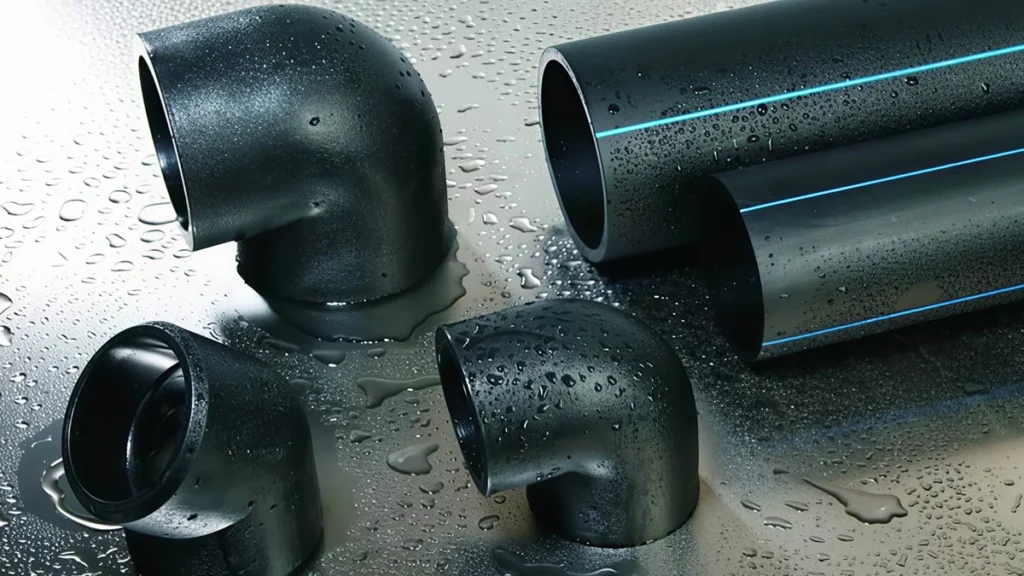
Market forecasts expect the Indonesian plastic pipe sector to hit $5.8 billion by 2027. HDPE currently holds a massive 60% share of that market. This explosive growth isn’t an accident. The material perfectly matches the intense geographical and industrial challenges unique to Indonesia.
Take the mining sector. Open-pit operations scattered across Kalimantan and Sumatra put piping systems through absolute hell, bombarding them with severe abrasion and harsh chemicals. When operators pump highly abrasive slurries, HDPE’s natural wear resistance easily outlasts traditional steel. Meanwhile, urban water and drainage networks face their own trials. Indonesia’s intense rainfall and frequent flooding require flexible infrastructure. Because HDPE bends instead of breaking, it absorbs the ground movement and seismic jolts that routinely destroy rigid pipes. The material also completely ignores galvanic corrosion. You simply don’t need expensive protective coatings or cathodic protection systems, even when burying lines in highly acidic or saline soils.
Nailing down the right HDPE pipe specification means carefully matching the Standard Dimension Ratio (SDR) to your required Nominal Pressure (PN). The SDR is just the ratio of the pipe’s outside diameter to its wall thickness. A lower SDR number translates to a thicker wall, which means a higher pressure rating.
For standard PE100 materials, the pressure mapping breaks down like this:
When it comes to linking everything together, engineers choose from several fitting methods based on the project’s size and the physical constraints of the job site:
Various industries rely on specific configurations of HDPE to keep their operations running smoothly and efficiently.
Mining Operations:
Mining companies deploy this piping heavily for slurry transport, underground dewatering, and open-pit drainage. Because it fights off corrosive mine water and abrasive mineral tailings so well, maintenance downtime drops dramatically. Facilities handling mineral extraction typically rely on heavy-duty lines—often SDR11 or SDR9—to manage high-pressure leachate and aeration systems.
Water Infrastructure:
PE100 pipes deliver completely leak-free performance for raw water transport and municipal supply mains. Their incredibly smooth internal surface boasts a remarkably low Hazen-Williams friction factor. That translates to consistent, predictable flow rates that last for decades, ultimately slashing the energy bills for municipal pumping stations.
Drainage and Sewer Systems:
When it comes to gravity sewers and lateral drainage, heavy-duty Double-Wall Corrugated (DWC) HDPE pipes hold the top spot. Engineers typically specify an SN4 or SN8 ring stiffness rating. The tough corrugated exterior handles heavy soil loads with ease. Meanwhile, the slick interior guarantees rapid water evacuation, which is critical during intense monsoon seasons.
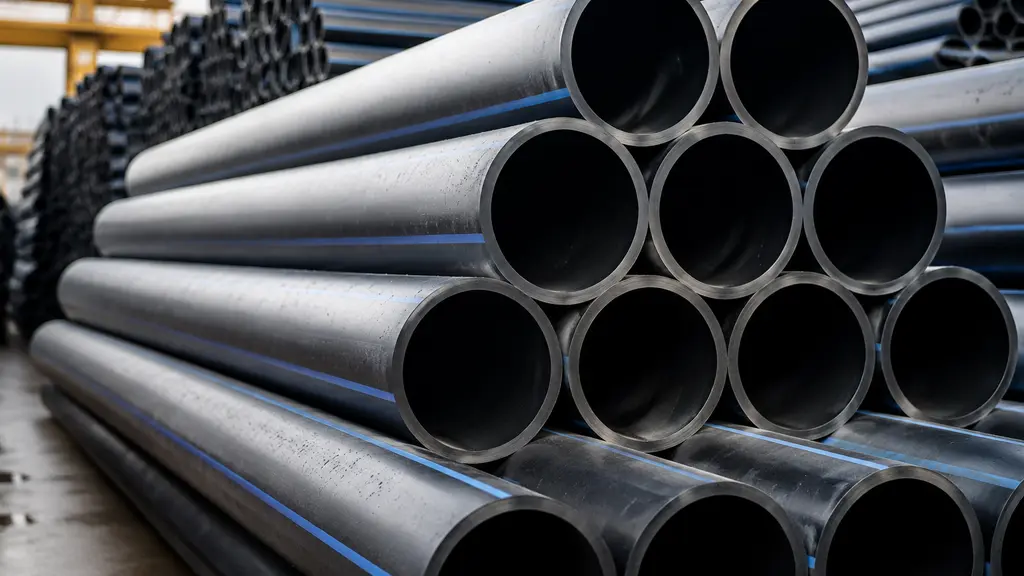
Specifying materials for an industrial pipeline means looking at the big picture. You have to weigh the hydraulics, the actual mechanics of installation, and the total lifecycle cost.
| Feature | HDPE | Ductile Iron (DI) | PVC | Steel |
|---|---|---|---|---|
| Corrosion Resistance | Excellent (Inherent) | Requires internal/external coatings | Excellent | Poor (Requires heavy coating/cathodic protection) |
| Flexibility | High (Accommodates ground movement) | Rigid | Moderate to Rigid | Rigid |
| Installation Method | Thermal fusion (leak-free) | Push-on joints, flanged | Solvent weld, mechanical | Welding, flanged |
| Lifecycle Cost | Low (50-100 year lifespan) | Moderate to High | Low upfront, higher maintenance | High (Maintenance intensive) |
| Hydraulics | Smooth bore, consistent friction | Internal diameter 24-40% larger than HDPE | Smooth bore | Susceptible to scaling and tuberculation |
Ductile Iron certainly has its place. It easily handles extreme pressures pushing 1,500 psi and provides a wider internal diameter for equivalent nominal sizes. However, HDPE completely dominates when you look at trenchless installations or highly corrosive environments. Its unmatched flexibility makes it the go-to choice for any project that needs to survive ground shifts and prevent seismic fractures.
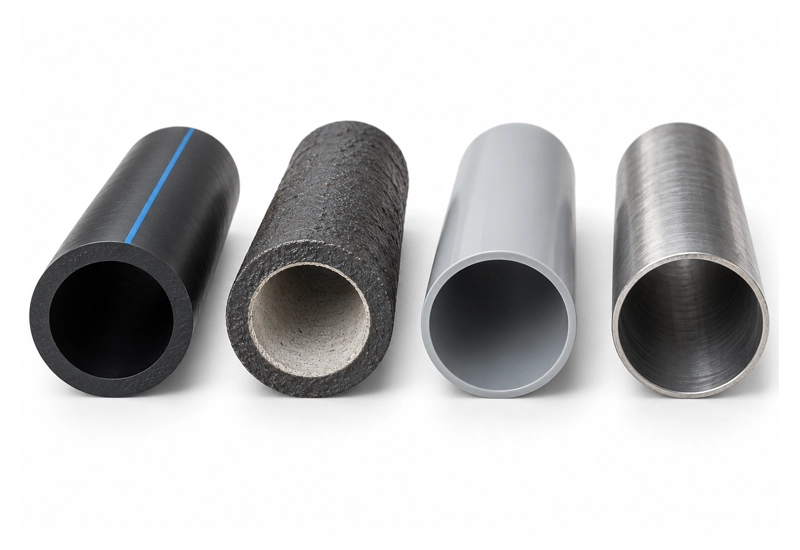
Getting your specifications right is the only way to guarantee the system will last and avoid catastrophic blowouts in the field. HDPE comes in a massive size range, starting at a tiny 20mm and scaling all the way up past 3000mm. Naturally, the larger diameters handle the heavy lifting for high-capacity fluid transport.
Technical Specification Planning Table:
| Parameter | Selection Criteria | Example Application |
|---|---|---|
| Diameter (DN/OD) | Flow rate requirements and velocity limits | DN500 for municipal raw water mains |
| Pressure Class (PN) | Maximum operating pressure + surge allowance | PN16 (1.6 MPa) for high-pressure pumping |
| SDR Rating | Wall thickness required for pressure/load | SDR11 for mining slurry lines |
| Joint Type | Trench space, pipe diameter, and budget | Butt fusion for open-terrain long distances |
| Site Conditions | Temperature, soil type, chemical exposure | PE100 for high UV and chemical exposure |
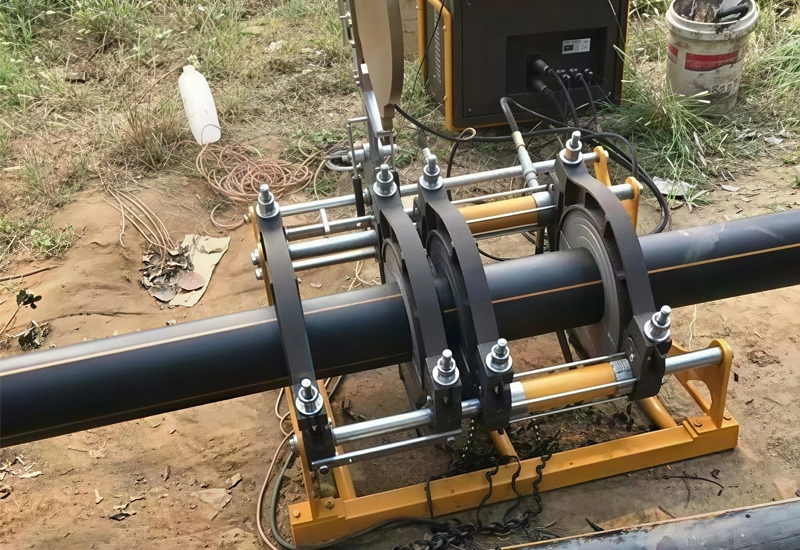
Deciding on a connection method usually comes down to space and scale. Butt fusion stands out as the most structurally robust and cost-effective choice for long-distance, large-diameter runs. Electrofusion, on the other hand, is the undisputed winner for emergency repairs, complex HDPE pipeline layouts, or tight trenches where dragging in bulky butt fusion equipment just isn’t physically possible.
You never want to gamble on substandard materials. Verifying a manufacturer’s compliance is the best way to mitigate that risk. Smart procurement teams always demand specific, verifiable documentation before signing off on a purchase order.
Procurement Verification Checklist:
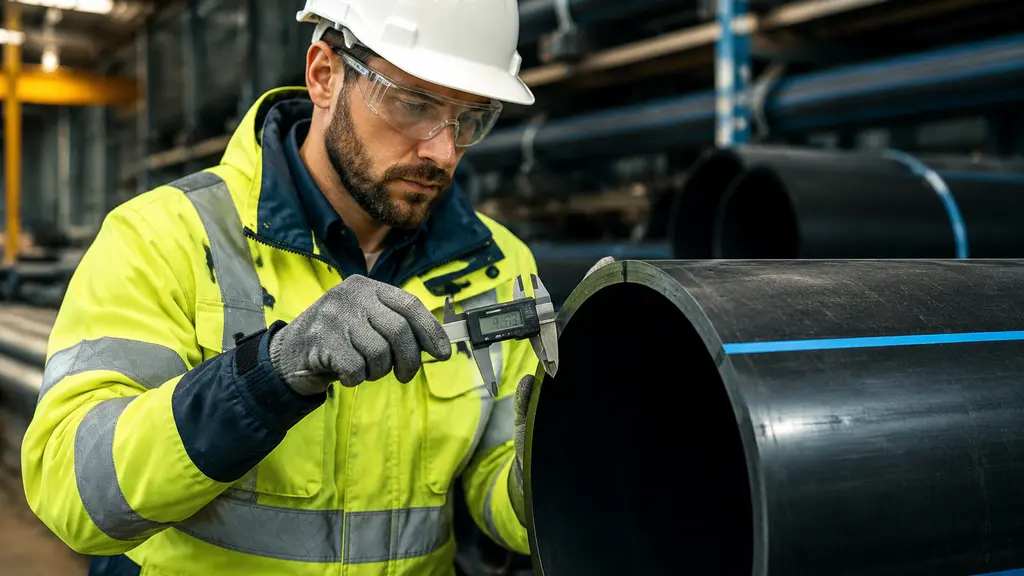
Building an accurate budget for an HDPE pipeline means looking closely at both raw material costs and the logistics involved in getting them to the site. Major manufacturers like JINQUAN typically quote lead times between 7 and 15 days. They back this up with factory-direct pricing and specialized export packaging designed specifically to survive transit through busy Indonesian ports.
Cost Breakdown Categories:
1. Pipe Material: Billed per meter, scaling based on the exact DN and SDR.
2. Fittings: Billed per unit. Keep in mind that electrofusion fittings cost more upfront due to the embedded resistance wires.
3. Fabrication/Fusion: Covers the cost of equipment rental and the daily rate for certified welding operators.
4. Freight: Includes the ocean freight to major hubs like Surabaya or Jakarta, plus the inland transport to your site.
5. Contingency: Always pad the budget by 5-10% to cover unexpected site variations.
Estimated Pricing per Meter (USD):
*Note: Smaller diameters (20mm-50mm) usually run between $0.50 and $2 per meter. Once you move into large diameters (200mm and up), expect prices to range from $10 to over $50 per meter, heavily dependent on the required pressure class.*
The 50-to-100-year lifespan of an HDPE system hinges entirely on a flawless installation. Cut corners here, and you compromise the whole network.
Step-by-Step Butt Fusion Overview:
1. Facing: Operators shave the pipe ends to guarantee they are perfectly parallel, staying within a strict ±1 mm tolerance at the butt face.
2. Heating: A specialized heater plate is applied. The temperature must sit squarely between 200–230°C.
3. Joining: Crews remove the plate and immediately press the melted ends together using precise hydraulic pressure.
4. Cooling: This is critical. Operators must maintain clamp pressure while the joint cools. The cooling time must equal exactly 1.5 times the heating duration. Pulling the clamps off too early will severely weaken the final joint.
Common Installation Mistakes to Avoid:
You can spot a qualified butt weld instantly. It will always present a continuous, highly uniform, and perfectly symmetrical double bead. You shouldn’t see any gaps, dirt, or contamination.
Picking the right manufacturing partner means looking way past the basic unit price. You have to dig into their quality control protocols, logistical reliability, and actual production capacity.
Imagine a mining operator in Kalimantan urgently needs 15 kilometers of DN500 slurry lines. Relying on a local distributor might backfire if they don’t carry that massive inventory, causing immediate project delays. That’s why evaluating a primary manufacturer requires verifying their true scale. If a supplier operates a 200-acre facility, pumps out over 100,000 tons annually, and runs 40+ high-speed extrusion lines, you know they can handle massive bulk orders without wrecking your lead times.
Supplier Evaluation Checklist:
Q1: Which HDPE pipe specification is best for mining water transfer in Indonesia?
For moving mining water, you want PE100 pipes carrying an SDR9 or SDR11 (PN16) rating. These specific grades provide the thick walls required to survive high-pressure slurry transport. They also shrug off severe internal abrasion from mineral tailings and easily withstand the punishing terrain found in Indonesian open-pit mines.
Q2: Can HDPE pipe be used for stormwater and drainage systems?
Absolutely. Engineers specifically design Double-Wall Corrugated (DWC) HDPE pipes with an SN4 or SN8 ring stiffness for drainage and stormwater applications. The rugged corrugated exterior easily supports heavy soil loads. Inside, the smooth wall ensures rapid water flow, making this setup perfect for flood control in regions hit by intense Indonesian rainfall.
Q3: What is the difference between butt fusion and electrofusion fittings?
Butt fusion involves pressing bare pipe ends against a hot plate until they melt, then forcing them together. It’s incredibly cost-effective for long, large-diameter stretches. Electrofusion relies on fittings packed with embedded electrical wires. When current flows through, the plastic melts and fuses. This method is the top choice for complex directional layouts, tight trenches, and emergency repairs.
Q4: How do I compare HDPE pipe prices from Indonesian suppliers?
Never compare prices just by length. Always base your comparisons on the exact Standard Dimension Ratio (SDR) and Nominal Diameter (DN). Demand a comprehensive cost breakdown that separates freight, fusion equipment rental, fittings, and the HDPE pipe material itself. Finally, make sure every quote meets ISO 4427 standards so you don’t end up buying cheap, low-grade resin.
Q5: What documents should I request before placing a bulk order?
Before you sign off on a bulk purchase, ask for third-party SGS test reports, ISO 9001/ISO 14001 factory certifications, and ISO 4427-2:2019 compliance certificates. If you are also sourcing certified welding operators or fusion equipment, you must request ISO 12176 documentation as well.
Q6: Is HDPE a better choice than PVC or steel for industrial water systems?
In most cases, HDPE easily outperforms both steel and PVC in industrial water settings. It boasts inherent corrosion resistance, high flexibility, and entirely leak-free thermal fusion joints. Unlike steel, it never needs protective coatings to fight galvanic corrosion. And unlike rigid PVC, HDPE absorbs ground shifts and seismic jolts without cracking.
Q7: How long does HDPE pipe usually last in corrosive environments?
When specified and installed correctly, HDPE boasts a design lifespan of 50 to 100 years—even when buried in highly corrosive environments. Because the material is chemically inert, it won’t degrade when exposed to harsh mining leachates, saline water, or acidic soils. This drastically lowers replacement and long-term maintenance costs.
Q8: What should I check before approving an HDPE installation?
Always conduct a visual inspection of the thermal fusion joints. A solid butt weld will display a uniform, highly symmetrical double bead completely free of dirt or gaps. For electrofusion, verify that the crew properly scraped the HDPE pipe before welding. Finally, confirm that operators strictly followed the mandatory cooling times (1.5 times the heating duration) before taking the clamps off.
Building reliable HDPE pipe and fittings system foe infrastructure in massive drainage, water, and mining projects demands flawless material specification and uncompromising installation standards. Transitioning to high-density polyethylene unlocks a proven 50-to-100-year lifecycle, but only if the materials strictly align with ISO 4427 standards. You have to carefully evaluate pressure classes and match your SDR ratings to the exact demands of the site. Furthermore, enforcing strict fusion protocols is completely non-negotiable if you want to prevent field failures. This means holding heater plates to that critical 200–230°C window and forcing crews to respect mandatory cooling times. When project engineers prioritize manufacturing partners backed by verified quality control and massive production capacity, they effectively wipe out supply chain bottlenecks. The result is long-term, rock-solid operational stability in even the most punishing environments.