Address
Zhengzhou, Henan, China
Work Hours
Monday to Friday: 7AM - 7PM
Weekend: 10AM - 5PM
Address
Zhengzhou, Henan, China
Work Hours
Monday to Friday: 7AM - 7PM
Weekend: 10AM - 5PM

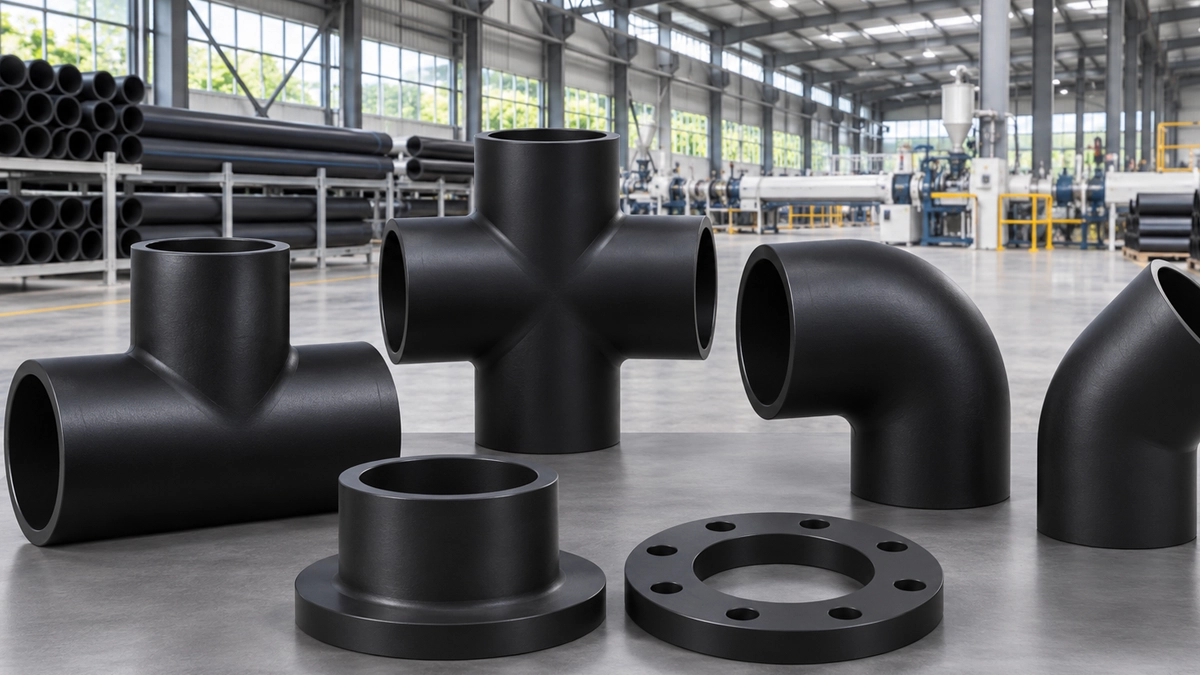
HDPE Pipe Fittings for Pressure Pipeline Systems: How to Choose the Right Type explains fitting types, pressure ratings, joining methods, and procurement checks so buyers can specify reliable parts for safe, long-life pipelines.
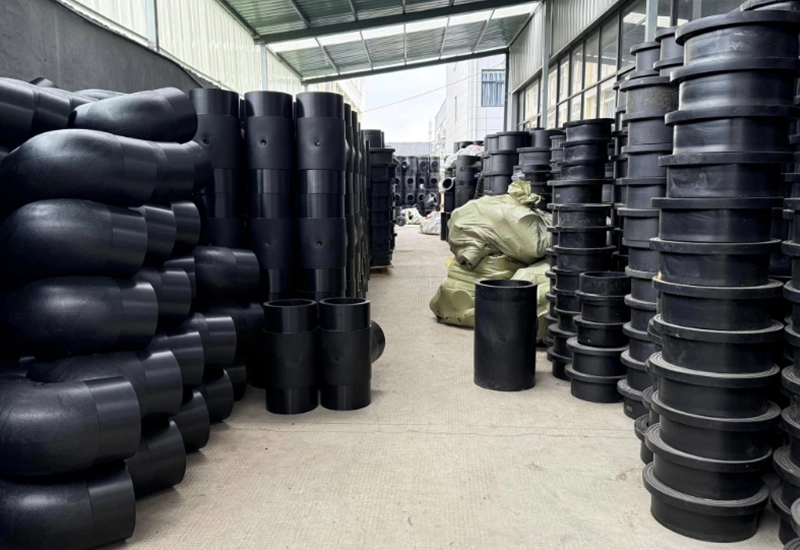
High-Density Polyethylene pipe fittings—think elbows, tees, reducers, and flanges—act as the critical joints in pressure pipeline systems. They connect, branch, or cap off pipelines that move fluids under intense stress. The golden rule for specifying these engineered components is simple: the fitting has to match or exceed the pipe’s Standard Dimension Ratio (SDR) and material grade, like PE100. Doing this preserves the system’s Nominal Pressure (PN) rating across the board.
If you are designing fluid transport networks for municipal water, agriculture, or industrial plants, getting this match right is crucial. It guarantees structural integrity for decades and slashes the risk of slow leaks or sudden blowouts caused by constant hydrostatic loads.
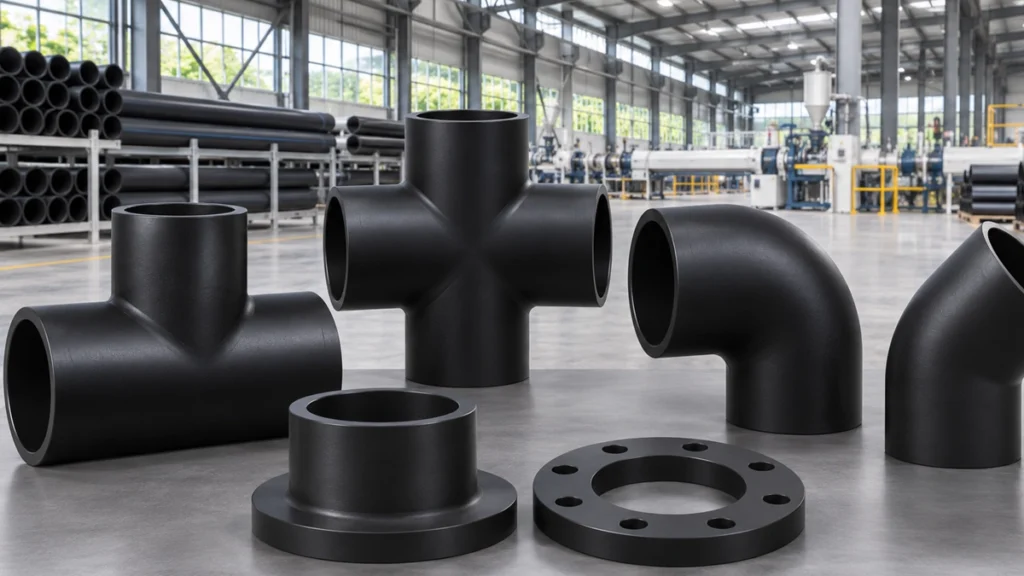
The lifespan and safety of a whole fluid network hinge heavily on picking the precise fitting for the job. Exact matching isn’t just a recommendation; it is an absolute requirement. Here are three reasons why:
Engineers need to navigate several distinct fitting categories, weighing factors like spatial limits, connection styles, and the overall scale of the project. Here is a breakdown of the primary options used in modern pressurized networks.
| Fitting Type | Diameter Range | Connection Method | Primary Advantages & Ideal Use Cases |
|---|---|---|---|
| Butt Fusion Fittings | DN20 to DN2000 | Heat plate fusion of spigot ends | High structural strength, lower component cost, ideal for long straight pipeline runs and large diameters. |
| Electrofusion Fittings | DN16 to DN630 | Embedded copper heating coils (Joule effect) | Perfect for tight trenches, vertical shafts, field repairs, and joining pipes with slightly varying wall thicknesses. |
| Flanged / Stub Flanges | Varies | Mechanical (steel backing rings) | Essential for connecting HDPE systems to valves, pumps, or legacy ductile iron and steel pipelines. |
| Transition Fittings | Varies | Factory-assembled joints | Used for transitioning from HDPE to metal or PVC threaded systems securely. |
| PP Compression Fittings | Up to DN110 | Mechanical split ring and nut | Quick, heat-free installation for smaller diameter service lines and irrigation networks. |
Pinpointing the ideal HDPE fittings requires a hard look at both the operating parameters of your pipeline and the physical installation environment. Use this step-by-step approach to narrow down the choices:
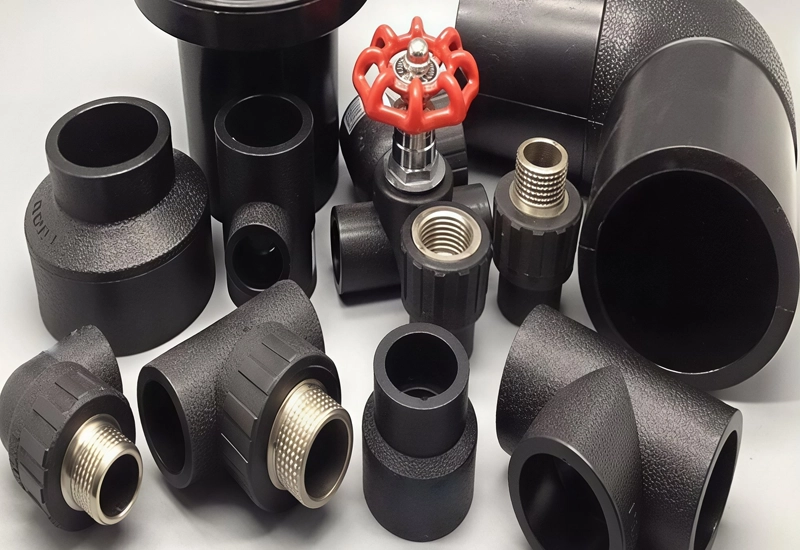
Engineering and procurement teams have to scrutinize technical parameters before greenlighting any fitting for high-pressure service. Getting these specs wrong leads straight to failed compliance checks and catastrophic system leaks.
Material Grades and Pressure Ratings
Manufacturers typically mold modern pressure HDPE pipe fittings from either PE100 or PE80 resin. Assuming a water temperature of 20°C and a design coefficient of C=1.25, the standard ratings shake out like this:
Wall Thickness Verification
The wall thickness of the fitting has to mirror the HDPE pipe. To put that in perspective, a DN110 SDR 11 fitting requires a 10.0 mm wall. Step up to a DN315 SDR 11 fitting, and you need a 28.6 mm wall thickness.
Required Standards and Certifications
Always check that the manufacturer meets rigorous global standards. You want to see ISO 4427 (International Water), EN 12201 (European Water), ASTM F714 / D3035 (US OD-based), or DIN 8074/8075. JINQUAN produces HDPE pipe and fittings that strictly adhere to these benchmarks, backed up by CE, ISO 9001, SGS, ISO 14586, and DIN 8077/8078 certifications.
| Parameter | Specification Requirement |
|---|---|
| Material Grade | PE100 (MRS 10 MPa) or PE80 (MRS 8 MPa) |
| OD Range | DN16 to DN3000 (depending on fitting type) |
| Design Temperature | Rated for 20°C (derating required for higher temps) |
| Key Standards | ISO 4427, EN 12201, DIN 8077/8078 |
You will find HDPE pressure fittings hard at work across heavily demanding sectors that cannot afford fluid leaks.
In Municipal Water Supply, drinking water networks depend heavily on ISO 4427 compliant HDPE pipe fittings. Components rated PN10 to PN16 guarantee safe, long-term water delivery without the threat of rust or corrosion. Agricultural Irrigation setups lean on these same HDPE fittings for main headers and high-pressure pump discharge lines, which face relentless vibration and harsh UV exposure daily. Meanwhile, Industrial & Mining operations push these components to the limit. They handle highly abrasive slurry mixtures and manage intense deep-dewatering applications, often hitting 140-meter depth limits using rugged SDR11 components.
Case Scenario: Consider a recent municipal water main upgrade that utilized DN315 SDR11 PE100 butt fusion fittings. The contract required the line to manage 16 Bar of continuous pressure. By perfectly matching the PE100 SDR11 specifications, the engineering team ensured the upgraded system could easily absorb transient surges from the city’s pumps without risking fatigue or joint failure.
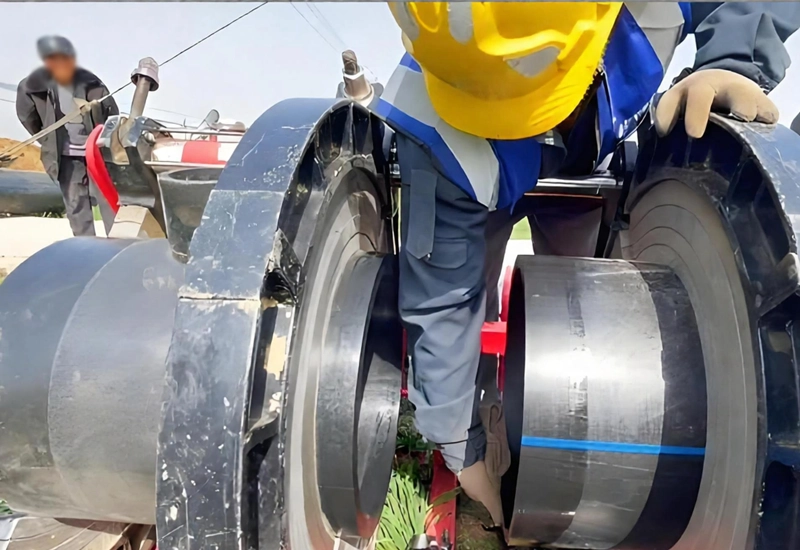
Flawless manufacturing means very little if the installation is sloppy. Proper jointing and rigorous field testing are the final barriers against system failure.
Installation Steps (Butt Fusion)
1. Alignment: Lock the HDPE pipe and fittings tightly into the fusion machine to stop any shifting.
2. Facing: Shave down the ends of both the HDPE pipe and fittings using the machine’s facer. They must be perfectly flat, clean, and parallel.
3. Heating: Apply the PTFE-coated heating plate at the exact temperature specified by ISO 4427 guidelines. Wait until a uniform melt bead rolls back on both components.
4. Fusion: Pull the heating plate out, press the molten ends together under a calculated pressure, and keep the joint completely immobile until it cools down to ambient temperature.
Pressure Testing Guidelines
Once installed, the HDPE pipeline must pass a hydrostatic test governed by standards like AWWA M55 or ASTM F2164 (Hydrostatic Pressure Rebound Method). Set your test pressure to 1.5 times the rating of the lowest-rated component in the line. The process is meticulous: fill the line with water, bleed out all trapped air, and pressurize it in phases—starting with initial expansion before moving to the main test phase. Finally, monitor the pressure decay over a set window, usually up to 8 hours.
Surprisingly, manufacturing defects rarely cause field failures in pressure HDPE pipelines. The vast majority of leaks trace back to procedural errors or external damage. You can protect your network by avoiding these common traps:
B2B buyers have to balance strict technical demands with the realities of procurement logistics to keep complex projects on schedule and within budget.
Cost Drivers
The price tag on an HDPE pressure fitting comes down to the resin grade (PE100 vs. PE80) and the SDR. A lower SDR dictates a thicker wall, which eats up more raw material and bumps up the cost. The type of fitting also heavily influences the budget. Because they feature embedded copper heating coils and require complex manufacturing steps, electrofusion fittings carry a noticeably higher price than standard butt fusion alternatives.
Procurement Logistics
Partnering with a high-capacity manufacturer changes the procurement dynamic. Take JINQUAN, for instance: operating a massive 200-acre facility with an annual output topping 100,000 tons allows for serious economies of scale and factory-direct pricing. Standard lead times usually run between 7 to 15 days. By offering flexible Minimum Order Quantities (MOQs), sending samples for quality checks, and using heavy-duty export packaging, international buyers get their components fully intact and right on time.
Picking a dependable manufacturing partner is the best way to cut supply chain risks and guarantee compliance with global engineering standards. When vetting suppliers, look hard at their factory capacity, their internal quality control protocols, and their verifiable international certifications—specifically ISO 9001, CE, and SGS.
To lock in the purchase and get an accurate technical quote, procurement teams need to draft a precise Request for Quotation (RFQ). A comprehensive RFQ checklist must detail:
Handing over this exact data upfront eliminates specification mismatches and dramatically speeds up the buying cycle.
How do I match HDPE fitting type to pipe SDR and pressure class?
To maintain pressure integrity, your fitting’s SDR must either perfectly match or be lower (meaning a thicker wall) than the pipe’s SDR. If you are working with a PE100 SDR11 pipe, you need a PE100 SDR11 fitting to hold that PN16 rating. Always double-check that the material grade and Outside Diameter (OD) align perfectly before starting the weld.
Is electrofusion or butt fusion better for pressure HDPE pipelines?
Both methods are fantastic for pressure applications when done right. Butt fusion is generally the more cost-effective choice for large diameters and long, straight HDPE pipeline runs. Electrofusion, however, takes the lead when you are working in confined trenches, vertical shafts, executing field repairs, or joining HDPE pipes that have slightly different wall thicknesses.
What information do I need to request an accurate quotation?
To get a precise quote, hand the supplier the exact Outside Diameter (OD), the required wall thickness or SDR, and the PN rating (pressure class). You also need to specify the fluid medium, operating temperature, preferred connection method (like flanged or butt fusion), and the target international standard (such as ISO 4427).
Can HDPE fittings be used in potable water systems?
Absolutely. HDPE is an industry favorite for potable water because it refuses to corrode, scale, or leach harmful chemicals into the supply. Just verify that the fittings are molded from virgin PE100 or PE80 resin and comply with major water safety standards like EN 12201 or ISO 4427.
How do I confirm compatibility between HDPE pipe and fittings brands?
Brand names matter far less than technical specifications. You confirm compatibility by ensuring both the fitting and the HDPE pipe share the exact same Outside Diameter (OD), resin grade (like PE100), and Standard Dimension Ratio (SDR). They also need to be manufactured to identical dimensional standards.
What should I check before pressure testing a new HDPE pipeline?
Before you start a hydrostatic test, make sure every fusion joint has completely cooled to the surrounding ambient temperature. Check that the HDPE pipeline is properly backfilled to stop it from shifting under stress, bleed all the trapped air out of the line, and verify that your test pressure never exceeds 1.5 times the rating of the weakest component in the system.
Why do HDPE pipeline joints fail in the field?
Field failures almost always trace back to external damage or bad installation practices. The usual suspects include cold welds caused by rushing the heating phase, fusing surfaces contaminated with moisture or dirt, and third-party excavator strikes. Point loading from rocky trench beds or trying to butt-fuse mismatched SDRs without transition techniques will also cause early failure.
Specifying the correct HDPE pipe fittings for pressure systems is a highly technical process, and it ultimately dictates how safe and durable your fluid transport network will be. Long-term success relies entirely on matching the fitting’s SDR, material grade (PE80 or PE100), and PN rating directly to the HDPE pipeline’s parameters. Whether you are using butt fusion for expansive municipal water mains or deploying electrofusion for tight industrial repairs, keeping melt flow rates and wall thicknesses uniform guarantees a leak-free, monolithic system.
Beyond the components themselves, strictly following installation protocols and running hydrostatic tests at 1.5x the working pressure will eliminate the vast majority of field failures. By teaming up with a certified, high-capacity manufacturer like JINQUAN, project managers secure standard compliance, technical accuracy, and smooth supply chain execution for major infrastructure builds worldwide.