Address
Zhengzhou, Henan, China
Work Hours
Monday to Friday: 7AM - 7PM
Weekend: 10AM - 5PM
Address
Zhengzhou, Henan, China
Work Hours
Monday to Friday: 7AM - 7PM
Weekend: 10AM - 5PM


For modern piping systems, selecting the right material is critical, as it affects not only the performance of the piping but also its service life, maintenance requirements, and overall cost-effectiveness. Among the many piping materials available today, HDPE pipes and PVC pipes are the two most commonly used piping materials in civil engineering, construction, water supply, sewage treatment, and irrigation systems.
HDPE pipes and PVC pipes both feature lightweight construction, corrosion resistance, smooth inner walls, and excellent fluid flow properties. However, due to their differing performance characteristics and application scenarios, they serve as critical choices for various engineering requirements. For engineers, contractors, and decision-makers planning new infrastructure projects or upgrading existing ones, understanding the differences between HDPE and PVC pipes is essential. This article will compare these two types of plastic pipes in terms of material properties, installation methods, characteristics, and costs to help you make an informed decision for your project.
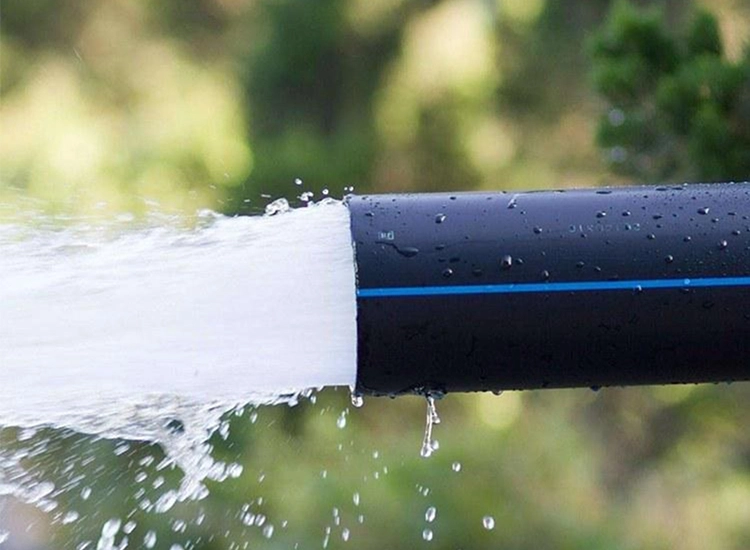
HDPE pipes are plastic pipes made from high-density polyethylene (HDPE) using an extrusion molding process. HDPE is a thermoplastic resin with high crystallinity, strong molecular structure, and non-polar properties, offering excellent heat resistance, cold resistance, high mechanical strength, good chemical resistance, wear resistance, and rigidity. HDPE plastic pipes made from high-density polyethylene can be used to transport water, gas, wastewater, slurry, and industrial fluids. Unlike traditional materials such as steel or concrete, HDPE pipes do not rust, scale, or rot even under harsh environmental conditions. Due to their long service life (typically exceeding 50 years), lightweight structure, and low maintenance requirements, PE pipes have become the preferred choice for municipal water supply, gas transmission, drainage, irrigation, and mining applications.
PVC pipe is a type of pipe made from polyvinyl chloride (PVC) resin, which is processed with stabilizers and lubricants and then extruded using a hot-pressing method. PVC is a synthetic material composed of polyvinyl chloride combined with other components, offering excellent heat resistance, toughness, and flexibility. PVC pipes offer advantages such as strong corrosion resistance, ease of bonding, low cost, and hardness. PVC pipes are particularly suitable for cold water supply, drainage, wastewater treatment systems, electrical cable protection, and agricultural irrigation.

Although HDPE pipes and PVC pipes are both widely used in modern infrastructure construction and have unique advantages, they are suitable for specific environments and engineering requirements. However, there are significant differences between them in terms of material properties, installation methods, performance, and cost. Whether you are using them for water supply, drainage, gas transportation, or agricultural irrigation, understanding the differences between HDPE water pipes and PVC pipes will help engineers or technicians make the right choice.
Both HDPE water pipes and PVC drain pipes offer excellent performance, durability, and corrosion resistance. However, each type of plastic pipe has its own unique characteristics, strengths, and optimal applications. To help you determine which pipe is more suitable for your project, the following content will provide a detailed analysis of the differences between HDPE water pipes and PVC drain pipes, enabling you to make the right choice based on your specific project requirements.
HDPE pipes are made from polyethylene resin, primarily composed of carbon and hydrogen. This simple and stable molecular structure ensures that PE100 pipes are non-toxic, halogen-free, and free of heavy metals, making them environmentally friendly and safe for use in drinking water transportation. Additionally, high-density polyethylene is chemically inert, meaning it does not release harmful substances into the environment during production, installation, or use. PVC tubes are made from polyvinyl chloride resin, which contains chlorine (Cl) atoms. During production, lubricants, stabilizers (such as lead salts or calcium-zinc composite agents), and plasticizers must be added. Traditional PVC drain pipes may contain lead, but calcium-zinc stabilizer products compliant with national standards can eliminate the risk of heavy metal contamination.
HDPE water pipes are highly flexible but lack rigidity. Small-diameter PE pipes can be shipped in coils. Even under external pressure or ground movement, they can bend without breaking. This flexibility makes them particularly suitable for trenchless installation. PVC plumbings have lower flexibility than HDPE pipes but higher rigidity, being inherently harder and more brittle. They have poorer resistance to bending or deformation. When subjected to excessive external forces or impacts such as heavy loads, temperature fluctuations, or soil movement, PVC pipes are more prone to cracking or breaking, making them more suitable for straight installations.
High-density polyethylene (HDPE) pipes are widely used in municipal water supply, gas transmission, wastewater treatment systems, and agricultural irrigation due to their excellent flexibility, chemical resistance, and durability, particularly in environments with unstable soil or non-linear pipe layouts. PVC pipes are widely used in residential and commercial drainage systems, cold water supply networks, electrical conduit protection, and low-pressure agricultural irrigation due to their high rigidity, ease of installation, and cost-effectiveness. They are suitable for straight installations in stable environments. However, PVC plastic pipes are brittle at low temperatures and have limited flexibility, making them unsuitable for load-bearing or dynamic installations.
| Application | HDPE Pipe | PVC Pipe |
|---|---|---|
| Water Supply System | municipal water supply, long-distance water transmission, and underground pipe networks. | Internal water supply of buildings, urban branch pipe network. |
| Drainage/Sewage System | heavy-load areas, frozen soil, and trenchless laying, it can adapt to foundation settlement, is impact-resistant, and not prone to cracking. | residential drainage and rainwater drainage systems are suitable for geologically stable areas, with high rigidity and low cost. |
| Gas Transportation | good sealing and chemical corrosion resistance, high safety. | not applicable, insufficient impact resistance and sealing, posing a safety hazard. |
| Agricultural Irrigation | Large farmland and buried drip irrigation systems have good flexibility, are resistant to aging, and are resistant to corrosion by fertilizers and pesticides. | low pressure irrigation, small farms, suitable for ground laying. |
| Industrial Piping Systems | transporting chemical media, slurry, corrosive fluids, such as in mines, chemical plants, sewage treatment and other fields. | light industrial systems or general non-corrosive fluid transportation, such as ventilation ducts and light chemical water. |
| Cable Protection System | protection of underground communication and power optical cables. | indoor exposed wire conduit and electrical pipeline protection. |
HDPE water supply pipes are typically connected using methods such as heat fusion welding, electrofusion welding, and socket welding. The joints are seamlessly integrated and highly sealed. For small-diameter pipes, compression fittings can be used for connections, while large diameter HDPE pipes can be customized with fabricated HDPE fittings for complex connections. HDPE water pipes are suitable for various environments, but connections require specialized welding equipment, resulting in higher construction costs.
In contrast, PVC pipes are typically connected using solvent-based adhesives or rubber gaskets (seals). These connection methods are simpler and faster, requiring no specialized connection equipment. Small-diameter pipes are often bonded with adhesive, while large-diameter pipes use rubber gasket socket connections. This method is convenient and cost-effective, but the connection strength is relatively weaker.
HDPE pipes offer exceptional durability, with strong resistance to impact, cracking, corrosion, and leakage. They require low maintenance, have a long service life, and are less prone to scaling and blockages inside. While PVC pipes are durable, the connection strength at pipe joints weakens over time, and failure to address this promptly can lead to leaks. Additionally, PVC pipes are susceptible to cracking under external pressure or temperature fluctuations, necessitating regular inspections and maintenance.
In modern municipal construction and industrial projects, selecting the appropriate pipe material plays a critical role in ensuring project reliability, construction efficiency, and cost control. HDPE water pipes and PVC drain pipes, as two mainstream plastic pipe materials, each possess their unique and irreplaceable advantages. PE material offers flexibility and low-temperature resistance, making it suitable for harsh and corrosive environments. PVC, with its rigidity and low cost, dominates the building drainage and electrical sectors. The choice between the two should be made by comprehensively considering factors such as the specific construction environment, lifecycle costs, and specific application requirements.
As one of the world’s leading manufacturers and suppliers of plastic pipes, JINQUAN continuously provides high-quality HDPE and PVC pipe solutions. In addition, it also offers HDPE fittings, PPR pipes and fittings, MPP pipes, DWC pipes, IPS PPH fittings and others. These products meet the diverse needs of different regions, projects, and application scenarios, helping global customers build efficient and durable pipe systems.
Fill out the form and our team will contact you shortly.